



TL;DR
AI-powered audit software is revolutionizing statutory audits, projected to grow from .0 billion in 2023 to 1.7 billion by 2033. It enhances efficiency by automating tasks (e.g., Checkfirst achieved 5X cost reduction), improves accuracy and fraud detection (KPMG Clara reduced fraud by 45%), and enables continuous compliance monitoring. Successful implementation requires strategic planning, selecting suitable AI technology like Finspectors.ai, and training auditors for human-AI collaboration.
Audit firms should invest in AI technology to remain competitive, meet increasing client expectations for efficiency and depth, and navigate complex regulatory environments. AI helps future-proof audit practices by improving governance, reducing operational costs, and transforming the audit function into a strategic asset, as highlighted by Dawgen Global's insights.
The right time to adopt AI for audit processes is now, given the rapid market growth and proven benefits. The AI in audit market is projected for substantial growth, indicating widespread adoption. Early adopters can gain a competitive advantage by streamlining operations, enhancing accuracy, and providing deeper insights to clients.
AI improves fraud detection by analyzing 100% of transactions, identifying subtle patterns, anomalies, and deviations from normal behavior that human auditors might miss. Platforms like KPMG Clara have demonstrated significant reductions in fraudulent activities, moving beyond sampling to comprehensive data scrutiny.
AI can significantly impact the cost of statutory audits by reducing manual labor, improving efficiency, and decreasing the time spent on repetitive tasks. While there's an initial investment in AI technology, the long-term benefits include lower operational costs, fewer errors, and enhanced fraud detection, leading to a strong return on investment. A global certification firm, for example, achieved a 5X reduction in administrative costs.
Why AI is Changing Statutory Audits
Statutory audits are a cornerstone of financial integrity, ensuring compliance and transparency. However, these processes have historically been labor-intensive, prone to human error, and often limited by sampling methodologies. Today,AI technology is rapidly transforming this landscape, offering unprecedented opportunities to automate, enhance, and streamline statutory audit processes. This shift isn't just about efficiency; it's about achieving a deeper level of assurance and continuous compliance.
The Evolution of Audit with AI Technology
The integration of AI technology into auditing marks a significant evolution, moving from traditional, manual checks to sophisticated, data-driven analysis. This change is driven by the sheer volume of data businesses generate and the increasing complexity of regulatory environments. AI-powered audit software can process vast datasets, identify patterns, and flag anomalies with a speed and accuracy impossible for human auditors alone. This allows audit teams to focus on strategic insights and complex judgment calls, rather than repetitive data verification.
Market Growth and AI Technology Trends
The market for AI in audit is experiencing explosive growth. Projections indicate the AI in audit market will expand from approximately USD 1.0 billion in 2023 to USD 11.7 billion by 2033, growing at a CAGR of 27.9%. This surge reflects the widespread recognition of AI's potential to revolutionize audit practices. The broader audit software market is also forecast to grow significantly, with CAGR estimates ranging from 11.3% to 18%, reaching up to USD 4.13 billion by 2035, according to various reports from Fortune Business Insights and Market Research Future. This growth underscores the increasing demand for advanced AI technology solutions in the financial sector.

Benefits of AI in Audit Automation
Automating statutory audit processes with AI-powered audit software brings a multitude of benefits, fundamentally altering how audits are conducted and perceived. These advantages span across efficiency, accuracy, and the strategic value of the audit function.
Enhanced Efficiency and Speed
One of the most immediate benefits of AI technology in auditing is the dramatic increase in efficiency. AI can automate numerous repetitive tasks, from data extraction and reconciliation to preliminary risk assessments. This allows auditors to complete audits faster, reducing the overall audit cycle time. For example, a global certification firm using Checkfirst integrated AI tools achieved a 5X reduction in administrative costs and 48% faster report completion.
- Automated Data Collection: AI can automatically gather and organize financial data from various sources, eliminating manual input and reducing errors.
- Faster Processing: Machine learning algorithms can analyze entire populations of transactions in minutes or hours, a task that would take human auditors weeks or months.
- Reduced Manual Effort: Auditors spend less time on mundane tasks, freeing them to focus on complex analysis and client interaction.
Improved Accuracy and Fraud Detection
AI-powered audit software excels at identifying anomalies and patterns that human auditors might miss, significantly enhancing audit accuracy and fraud detection capabilities. KPMG, for instance, utilized its KPMG Clara AI platform to achieve a 45% reduction in fraudulent financial activities. Similarly, Deloitte's Omnia AI platform led to a 40% reduction in audit review errors, demonstrating the power of AI technology in improving audit quality.
- Comprehensive Data Analysis: AI can analyze 100% of transactions, rather than just a sample, leading to a more thorough and reliable audit.
- Anomaly Detection: Machine learning models are trained to spot unusual transactions, deviations from norms, or suspicious patterns indicative of fraud or error.
- Predictive Analytics: Some AI solutions use predictive analytics to anticipate potential risks or compliance issues before they materialize, enabling proactive intervention.
Continuous Compliance Monitoring and Risk Management
AI technology enables a shift from periodic audits to continuous compliance monitoring, providing real-time insights into an organization's financial health and regulatory adherence. This proactive approach helps identify and mitigate risks much earlier. As Dawgen Global highlights, AI audits are about "future-proofing AI systems, building trust, and ensuring business resilience in a rapidly changing regulatory environment."
- Real-time Alerts: AI systems can issue immediate alerts for any detected irregularities or compliance breaches, allowing for quick corrective action.
- Dynamic Risk Assessment: AI continuously assesses and updates risk profiles based on new data, ensuring that audit efforts are always focused on the most critical areas.
- Enhanced Governance: AI-powered dashboards provide executives and compliance officers with a clear, up-to-date view of the organization's risk posture and compliance status.
Key AI-Powered Audit Software Features
Modern AI-powered audit software integrates a range of sophisticated features designed to automate and enhance every stage of the statutory audit process. These features leverage advanced AI technology, including machine learning and natural language processing, to deliver superior audit outcomes.
Automated Evidence Collection and Data Extraction
One of the most time-consuming aspects of auditing is gathering and preparing evidence. AI technology streamlines this by automating the collection and extraction of relevant data from various sources and formats. This is a crucial step in how smart automation is reshaping fieldwork and evidence collection.
- Intelligent Document Processing: AI can read and extract data from unstructured documents like invoices, contracts, and bank statements, converting them into structured, auditable formats.
- API Integrations: Seamless connections with ERP systems, CRM platforms, and other financial software enable automated data pulls.
- Data Normalization: AI cleans and standardizes data from disparate sources, ensuring consistency and accuracy for analysis.
Risk-Based Audit Prioritization and Sampling
AI algorithms can analyze vast amounts of data to identify and prioritize high-risk areas, allowing auditors to allocate their resources more effectively. This moves beyond traditional statistical sampling to intelligent, risk-focused approaches.
As a senior accountant at Crowe MacKay LLP noted about MindBridge Ai Auditor, the platform "supports risk assessments by automatically highlighting and ranking transactions by risk, allowing auditors to focus on true anomalies rather than random samples."
Continuous Monitoring and Real-Time Alerts
AI-powered audit software provides capabilities for continuous monitoring, a critical component for maintaining ongoing compliance and identifying issues as they arise. This proactive approach is a significant upgrade from periodic reviews.
- Transaction Monitoring: AI systems continuously monitor financial transactions for deviations from established policies or unusual activity.
- Compliance Rule Checks: Automated checks against regulatory requirements and internal controls ensure ongoing adherence.
- Alert Generation: When anomalies or non-compliance events are detected, the system generates real-time alerts for immediate investigation.
Implementing AI in Your Audit Process
Adopting AI-powered audit software requires a strategic approach, from initial assessment to full integration. Organizations looking to automate statutory audit processes using AI technology should consider a phased implementation, focusing on high-impact areas first.
Strategic Planning and Risk Identification
Before deploying any AI technology, it's crucial to identify which audit areas will benefit most and to understand the associated risks. This involves a comprehensive assessment of current processes and potential AI applications. You can explore a roadmap for transitioning to an AI-augmented audit firm.
- Identify High-Risk Areas: Focus AI implementation on areas with significant data volume, high transaction complexity, or a history of errors/fraud.
- Define Clear Objectives: Establish measurable goals, such as reducing audit cycle time by X% or increasing fraud detection rates by Y%.
- Assess Data Readiness: Evaluate the quality, accessibility, and structure of your existing data to ensure it's suitable for AI analysis.
Choosing the Right AI-Powered Audit Software
Selecting the appropriate AI-powered audit software is critical for successful implementation. Solutions like Finspectors.ai offer specialized tools designed to automate statutory audit workflows and achieve continuous compliance readiness. Consider factors such as integration capabilities, scalability, and specific features.
When evaluating AI technology solutions, look for platforms that offer:
- Seamless Integration: The software should easily integrate with your existing ERP, accounting, and other financial systems (e.g., Salesforce, as seen in Checkfirst's case study).
- Scalability: The solution should be able to handle increasing data volumes and expand to cover more audit areas as your needs grow.
- Regulatory Explainability: Ensure the AI provides clear explanations for its findings, crucial for regulatory compliance and auditor understanding.
Training and Human-AI Collaboration
AI technology is meant to augment, not replace, human auditors. Effective implementation requires training audit teams to work collaboratively with AI tools, interpreting their insights and applying professional judgment. This is central to the transformative role of AI in modern auditing.
- Upskill Auditors: Provide training on how to use AI tools, interpret AI-generated risk scores, and leverage insights for deeper analysis.
- Focus on Judgment: Emphasize that AI handles repetitive tasks, allowing auditors to focus on complex decision-making, client communication, and strategic insights.
- Establish Clear Workflows: Define how AI findings are integrated into the audit process and how human auditors validate and act upon these insights.
Real-World Impact of AI Audit Software
The practical application of AI-powered audit software is yielding significant, measurable results across various organizations. These case studies highlight the tangible benefits of adopting AI technology for statutory audits.
Case Studies in Efficiency and Accuracy
Leading firms and companies are demonstrating how AI technology can dramatically improve audit outcomes. For example,KPMG's Clara platform has been credited with a 45% reduction in fraudulent financial activities, showcasing AI's power in fraud detection. Similarly,Deloitte's Omnia AI platform led to a 40% reduction in audit review errors, underscoring the accuracy benefits.
Grant Thornton, utilizing its proprietary AI audit software, achieved a 30% reduction in audit duration, alongside better risk identification and a reduced manual workload. These examples illustrate how AI technology solutions translate directly into operational improvements and enhanced audit quality.
Transforming Audit Functions into Strategic Assets
The shift to AI-augmented auditing allows audit functions to move beyond compliance-only roles and become strategic partners within an organization. As RSM noted, their AI-powered audit assistant helped teams navigate complex compliance requirements, flagging risks early and reducing last-minute surprises, ultimately leading to audit functions being "viewed as strategic assets."
This transformation is enabled by AI's ability to provide deeper insights into business operations, identify emerging risks, and contribute to better decision-making. By automating routine tasks, auditors can dedicate more time to value-added activities, such as advising on internal controls or process improvements.
Measurable Outcomes and ROI
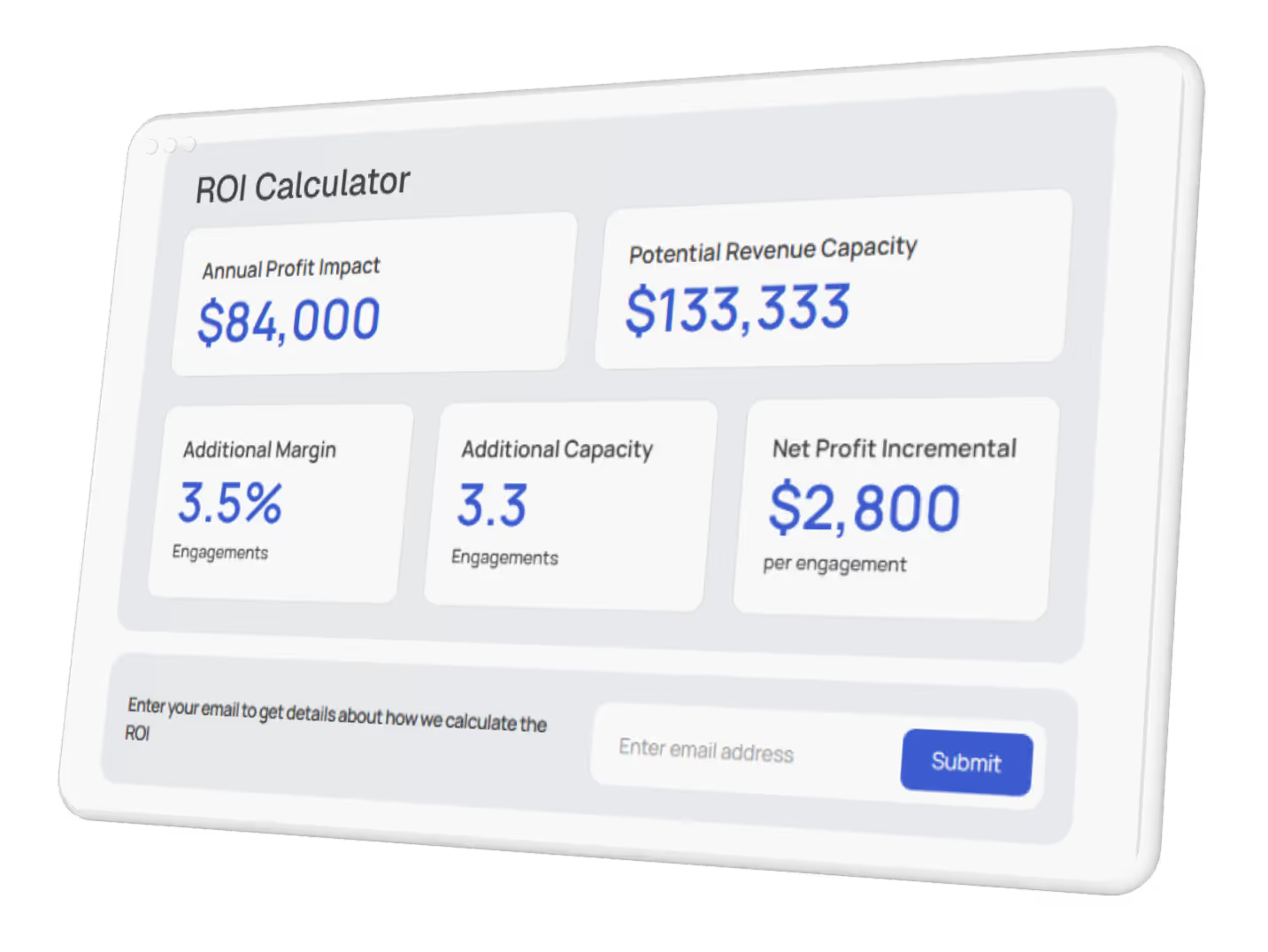
The investment in AI-powered audit software often yields a strong return on investment through cost savings, improved compliance, and enhanced business intelligence. The global certification firm that partnered with Checkfirst saw a 35% boost in auditor utilization and standardized reporting across geographies, in addition to significant cost reductions.
Siemens, by implementing AI for ISO 9001 Quality Control, experienced a 25% decrease in non-conformance incidents and fewer audit delays, highlighting the preventative power of AI technology. These metrics underscore the tangible benefits of integrating AI into statutory audit processes.
Challenges and the Future of AI Auditing
While the benefits of AI-powered audit software are clear, implementing these advanced AI technology solutions also presents certain challenges. Understanding these hurdles and anticipating future developments is crucial for successful long-term adoption.
Overcoming Implementation Challenges
Integrating new AI technology into established audit workflows can be complex. Challenges often include data quality issues, resistance to change from audit teams, and the need for significant upfront investment. However, these can be mitigated with careful planning and strategic execution.
- Data Quality and Integration: Ensuring clean, consistent data from various sources is paramount. Organizations must invest in data governance and integration strategies.
- Talent Gap: There's a growing need for auditors with data science skills and an understanding of AI. Training and upskilling existing staff are essential.
- Ethical and Regulatory Concerns: As AI becomes more prevalent, addressing biases in algorithms, ensuring data privacy, and navigating evolving regulatory frameworks are critical.
Regulatory Explainability and Trust in AI
A key challenge for AI in auditing is ensuring that the decisions and findings generated by AI are transparent and explainable. Auditors and regulators need to understand how AI arrives at its conclusions, especially for statutory audits where accountability is paramount.
- Black Box Problem: Some advanced AI models can be opaque, making it difficult to trace their decision-making process.
- Audit Trails: AI-powered audit software must provide robust audit trails that document every step of the analysis, from data input to final output.
- Human Oversight: Maintaining human oversight remains crucial to validate AI findings and apply professional judgment, particularly in complex or ambiguous situations.
The Future Landscape of AI Auditing
The future of AI in auditing is bright, with continuous advancements in AI technology promising even more sophisticated capabilities. We can expect further integration of generative AI for report generation and predictive analytics for proactive risk management. The global AI software market is projected to hit USD 467 billion by 2030, indicating massive potential for specialized audit applications.
The trend is towards more autonomous audit processes, where AI handles routine checks, leaving auditors to focus on high-value strategic tasks. This will lead to a more dynamic, responsive, and insightful audit profession, continuously adapting to the evolving business and regulatory environment. This future vision is also explored in modernizing audit evidence through full automation.
Conclusion
Automating statutory audit processes using AI-powered audit software is no longer a futuristic concept but a present-day imperative. The rapid growth of the AI in audit market, coupled with tangible benefits in efficiency, accuracy, and continuous compliance, underscores the transformative power of AI technology. By embracing AI solutions, audit firms and internal audit departments can move beyond traditional limitations, deliver deeper insights, and elevate the strategic value of their audit function. The journey involves careful planning, strategic software selection, and a commitment to human-AI collaboration, ultimately leading to more robust, reliable, and future-proof audit practices.