



TL;DR
In 2025, the audit software market is experiencing robust growth, projected to reach .482 trillion and expand at a 10.22% CAGR through 2033, driven by the need for enhanced efficiency, accuracy, and compliance. Top solutions for CA firms include AuditBoard, TeamMate+ Audit, SAP Audit Management, LogicGate, Netrix Auditor, and AI-powered Finspectors, which leverage AI and ML for tasks like anomaly detection and continuous monitoring. Successful implementation requires strategic planning, training, and secure cloud integration to transform audit processes and deliver greater client value.
Audit Automation Market Overview 2025
The landscape of auditing is undergoing a significant transformation, driven by rapid advancements in automation technology. Chartered Accountant (CA) firms are increasingly adopting audit automation software to enhance efficiency, accuracy, and compliance. This shift is not merely about digitizing existing processes but fundamentally rethinking how audits are conducted, leveraging sophisticated tools to manage complex data sets and regulatory requirements.
The global audit software market is experiencing substantial growth, reflecting the critical need for firms to adapt to a dynamic regulatory environment and client expectations. The broader audit software sector reached an impressive $1.482 trillion in 2025 and is projected to expand at a CAGR of 10.22% through 2033, potentially reaching $3.23 trillion by 2033.
Regional Market Distribution and Growth
Geographically, the adoption of audit automation technology is varied, with certain regions leading the charge. This dominance is expected to continue, as firms in these sectors prioritize efficiency and robust compliance frameworks.
A detailed breakdown of the market share by region in 2025 highlights the global nature of this trend. While North America leads, Europe and Asia Pacific also represent significant portions of the market, demonstrating a worldwide move towards enhanced audit capabilities. The growth rates across these regions further emphasize the universal recognition of the value that audit automation brings to CA firms.
Drivers and Benefits of Audit Automation
The push towards audit automation is fueled by several critical factors, primarily the need for greater efficiency, accuracy, and compliance in an increasingly complex financial world. CA firms are recognizing that traditional manual audit processes are no longer sustainable for managing the volume and complexity of modern financial data.Automation technology trends are making it possible to overcome these challenges, offering significant advantages.
One of the primary growth catalysts is the integration of AI, cloud computing, and machine learning into audit software. These technologies enable capabilities that were previously unimaginable, such as real-time fraud detection, automated data sampling, and continuous monitoring. The shift towards cloud-based solutions also provides greater accessibility, scalability, and collaboration opportunities for audit teams, regardless of their physical location.
Key Drivers for Adopting Automation Technology
- Enhanced Efficiency: Automation significantly reduces the time spent on repetitive, manual tasks, allowing auditors to focus on higher-value activities like analysis and strategic insights. This includes automating data extraction, reconciliation, and report generation.
- Improved Accuracy: By minimizing human error, automation technology solutions ensure a higher degree of accuracy in data processing and analysis. Algorithms can identify discrepancies and anomalies that might be missed by human auditors.
- Better Compliance: Audit automation software helps firms stay abreast of ever-evolving regulatory requirements by embedding compliance checks and generating audit trails automatically. This is crucial for maintaining regulatory adherence and avoiding penalties.
- Cost Reduction: Streamlined processes and reduced manual effort translate into lower operational costs for CA firms. The initial investment in automation technology is often offset by long-term savings in labor and resources.
- Real-time Insights: Modern audit software provides real-time dashboards and analytics, offering immediate visibility into financial health and potential risks. This enables proactive decision-making and risk mitigation.
Benefits for CA Firms
The benefits extend beyond mere operational improvements, impacting client relationships and the strategic positioning of CA firms. By adopting automation technology best practices, firms can offer more comprehensive and timely services, enhancing their competitive edge. For instance, the ability to conduct continuous audits means clients receive ongoing assurance rather than periodic snapshots, fostering greater trust and transparency.
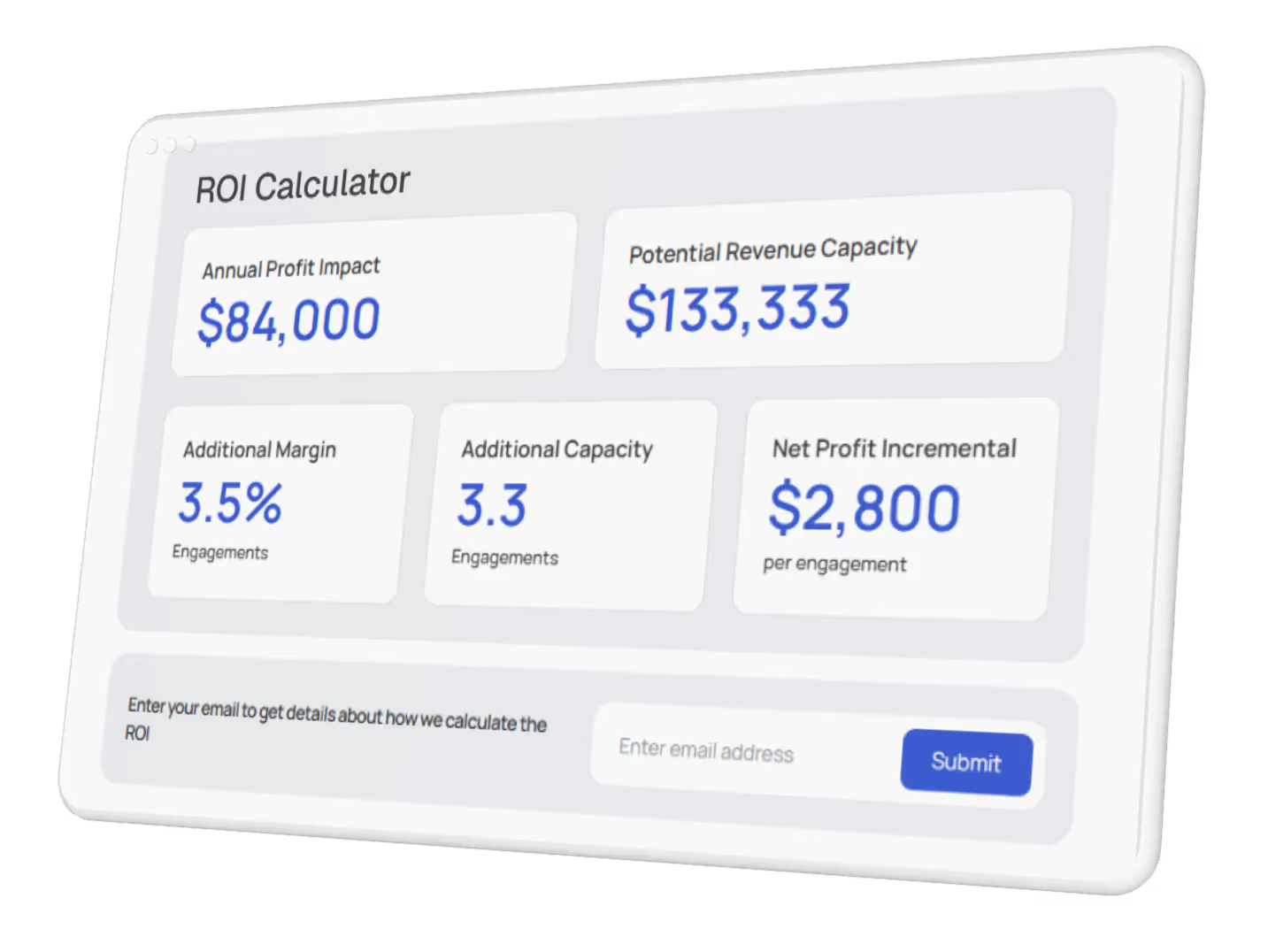
Furthermore, automation empowers auditors to delve deeper into data, uncovering insights that can add significant value to clients. This consultative approach transforms the auditor's role from a compliance checker to a strategic advisor. The ROI of automation in audit and finance has been highlighted in various discussions, emphasizing its role in increasing efficiency, improving accuracy, and enhancing risk assessment, ultimately leading to improved audit quality and greater stakeholder confidence.
Top Audit Automation Software for CA Firms
The market for audit automation software is diverse, offering a range of solutions tailored to different firm sizes and specific needs. For CA firms in 2025, selecting the right platform involves evaluating features, scalability, integration capabilities, and user-friendliness. Several key players have emerged as leaders, providing robust tools that address the complex demands of modern auditing.
These platforms often combine core audit functionalities with advanced features like AI-powered analytics, robotic process automation (RPA), and comprehensive compliance management. The goal is to provide an all-in-one solution that streamlines the entire audit lifecycle, from planning and risk assessment to execution and reporting. Firms like AAFCPAs, Armanino, and Grant Thornton are recognized among the best for technology adoption in 2025, implying their reliance on such advanced tools.
Leading Audit Automation Solutions
- AuditBoard: Recognized as a premier all-in-one audit platform, AuditBoard streamlines risk management, compliance, and audit execution. It offers AI-powered automation capabilities, real-time collaboration, and centralized documentation. Many Fortune 500 companies trust AuditBoard to improve audit workflows, reducing manual tasks and boosting team efficiency. Its features include risk assessment, regulatory compliance management, and ESG integration.
- TeamMate+ Audit: Known for its powerful automation capabilities, TeamMate+ Audit significantly reduces the audit lifecycle time from planning to reporting. It helps auditors automate accounts payable audits, risk-based assessments, supplier audits, and asset tracking. The software provides customizable workflows and analytics, enhancing audit productivity and accuracy, leading to better transparency and accountability.
- SAP Audit Management: An enterprise-grade solution with deep integration into SAP ERP systems, SAP Audit Management is ideal for large firms requiring comprehensive risk assessment and audit lifecycle management. It enables real-time monitoring and analytics for proactive audit risk management, proven to accelerate audit execution and improve risk detection.
- LogicGate: This flexible risk management platform allows for customized workflows tailored specifically for auditors. LogicGate assists firms in managing evolving regulatory challenges with real-time reporting and improved risk oversight. It centralizes risk and regulation management, enhancing operational efficiency and audit quality.
- Netrix Auditor: Specializing in IT audit automation, Netrix Auditor offers comprehensive IT risk management tools, including user activity monitoring and regulatory tracking. It improves audit quality for technology-driven assessments, ensuring industry compliance with significant efficiency gains.
- Finspectors: A rising star in the audit automation space, Finspectors offers AI-powered audit features designed to enhance efficiency and accuracy for CA firms. It focuses on intelligent data extraction, anomaly detection, and automated compliance checks, making it a valuable tool for firms looking to leverage cutting-edge AI in their audit processes. Finspectors aims to reduce manual effort and provide deeper insights through advanced analytics.
Comparison of Key Features
When evaluating these solutions, CA firms should consider specific features that align with their operational needs and strategic goals. The ability to integrate with existing systems, the level of AI-powered analytics, and the robustness of compliance management tools are all critical considerations. Each software offers a unique blend of capabilities, making a thorough assessment essential.
For instance, while AuditBoard excels in comprehensive risk and compliance, TeamMate+ Audit focuses on streamlining the audit lifecycle, and SAP Audit Management is best for firms deeply embedded in the SAP ecosystem. Finspectors, with its AI-centric approach, is particularly appealing for firms prioritizing advanced analytical capabilities and intelligent automation.
AI and Machine Learning in Audit Automation
The integration of Artificial Intelligence (AI) and Machine Learning (ML) is revolutionizing audit automation, moving beyond simple task automation to intelligent analysis and predictive capabilities. These technologies are enabling CA firms to process vast amounts of data more efficiently, identify patterns, and detect anomalies with a level of precision previously unattainable. The impact of AI-powered audit features is profound, transforming how auditors approach risk assessment, evidence gathering, and reporting.
AI algorithms can learn from historical data to predict potential risks, flag unusual transactions, and even suggest areas for deeper investigation. This proactive approach to auditing allows firms to identify issues earlier, mitigate risks more effectively, and provide more valuable insights to their clients. The shift from reactive to proactive auditing is a key benefit of incorporating AI and ML into audit automation strategies.
How AI and ML Enhance Audit Processes
- Automated Data Sampling: AI can intelligently select optimal data samples, reducing the need for manual, often biased, sampling methods. This ensures a more representative and efficient review of financial records.
- Anomaly Detection: Machine learning algorithms can identify unusual patterns or outliers in large datasets that may indicate fraud, errors, or control weaknesses. This capability is crucial for enhancing the integrity of financial statements.
- Natural Language Processing (NLP): NLP allows audit software to analyze unstructured data, such as contracts, emails, and legal documents, to extract relevant information and identify potential risks or compliance issues.
- Predictive Analytics: AI can forecast future trends and potential risks based on historical data, enabling auditors to anticipate challenges and advise clients proactively.
- Continuous Monitoring: AI-powered systems can continuously monitor transactions and financial activities, providing real-time alerts for any deviations from expected norms, thus facilitating ongoing assurance.
Case Studies: AI in Action
Several audit automation software solutions are already leveraging AI and ML to deliver tangible benefits. For example, AuditBoard incorporates AI for enhanced risk assessment and compliance management, allowing firms to quickly identify and prioritize areas of concern. Wolters Kluwer emphasizes that audit automation is now a business imperative, highlighting how AI continuously monitors transactions and integrates with financial systems to identify issues early.
Finspectors, for instance, specifically focuses on AI-powered audit features to streamline data extraction and anomaly detection. This allows CA firms to significantly reduce the time spent on mundane tasks, freeing up auditors to perform more analytical and strategic work. The ability of such platforms to learn and adapt over time means their effectiveness only grows with continued use, offering a powerful tool for enhancing audit quality and efficiency.
Implementing Audit Automation Successfully
Implementing audit automation software requires a strategic approach to ensure successful adoption and maximize return on investment. It's not simply about purchasing software but integrating it seamlessly into existing workflows, training staff, and adapting firm methodologies. Effective implementation involves careful planning, stakeholder engagement, and a phased rollout to minimize disruption and optimize benefits.
A key aspect of successful implementation is automation technology strategies that focus on workflow customization. Each CA firm has unique processes and client requirements, so the software must be adaptable. Platforms like LogicGate and TeamMate+ Audit offer customizable workflows that can be tailored to match specific evaluation methodologies, enhancing relevance and effectiveness across different audit contexts.
Steps for Effective Implementation
- Assess Current Processes: Before selecting software, thoroughly analyze current manual audit processes to identify bottlenecks, inefficiencies, and areas where automation can provide the most significant impact.
- Define Clear Objectives: Establish specific, measurable, achievable, relevant, and time-bound (SMART) goals for automation. These could include reducing audit cycle time, improving accuracy rates, or enhancing compliance.
- Select the Right Software: Choose a solution that aligns with the firm's size, budget, integration needs, and specific audit requirements. Consider factors like scalability, user-friendliness, and vendor support.
- Phased Rollout: Implement the software in stages, starting with a pilot project or a specific audit area. This allows the firm to learn, make adjustments, and build confidence before a full-scale deployment.
- Comprehensive Training: Provide thorough training to all audit staff on how to use the new software effectively. User engagement and ease of use are crucial for adoption, as demonstrated by platforms like TeamMate+ Audit and AuditFile.
- Integrate with Existing Systems: Ensure seamless integration with ERP, accounting, and other financial systems to accelerate data flow and minimize manual reconciliation errors. Solutions like SAP Audit Management and TeamMate+ Audit excel in this area.
Best Practices for Adoption
Beyond the technical steps, fostering a culture of adoption is paramount. This involves communicating the benefits of automation to staff, addressing concerns, and showcasing success stories. Real-time collaboration and centralization, facilitated by tools like AuditBoard and Diligent, are vital for reducing version control issues and enhancing audit cycle transparency across teams and locations.
Continuous monitoring and analytics, replacing periodic manual checks, are also essential. Utilizing AI and data analytics, as offered by Solvexia and Diligent, allows firms to monitor transactions for anomalies and flag risks proactively, significantly reducing fraud and errors. This proactive approach is a cornerstone of effective audit automation.
Compliance Management and Risk Mitigation
In the highly regulated environment of financial auditing, compliance management and risk mitigation are paramount. Audit automation software plays a critical role in helping CA firms navigate complex regulatory landscapes, ensuring adherence to standards, and proactively identifying and addressing potential risks. The ability to automate compliance checks and maintain comprehensive audit trails is invaluable for demonstrating due diligence and avoiding costly penalties.
Modern audit automation solutions are designed with robust compliance features that track regulatory changes, automate evidence gathering, and generate compliance reports. This significantly reduces the manual effort involved in compliance, allowing auditors to focus on interpreting regulations and advising clients on best practices. The integration of compliance automation tools is becoming a standard expectation for leading CA firms.
Key Features for Compliance and Risk
Regulatory Tracking and Updates:Software automatically monitors and updates regulatory requirements, ensuring the firm is always working with the latest standards.
Automated Evidence Gathering:Systems can automatically collect and organize audit evidence, reducing manual data collection and ensuring all necessary documentation is in place.
Risk Assessment and Scoring:Tools provide frameworks for identifying, assessing, and scoring risks, allowing firms to prioritize audit efforts based on potential impact and likelihood.
Control Testing Automation:Automated testing of internal controls helps verify their effectiveness and identify weaknesses, strengthening the overall control environment.
Audit Trail and Documentation:Comprehensive audit trails are automatically generated, documenting every step of the audit process for transparency and regulatory scrutiny.
Policy and Procedure Management:Centralized management of internal policies and procedures ensures consistency and adherence across the firm's operations.
Proactive Risk Management
The shift towards proactive risk management is a significant advantage of audit automation. Instead of discovering issues after they have occurred, firms can use AI and continuous monitoring to identify potential risks in real-time. Glasscubes highlights that top audit software providers like MetricStream and Hyperproof enhance proactive risk management and real-time compliance tracking with automated evidence gathering.
For example, Finspectors' anomaly detection capabilities can flag unusual transactions or deviations from expected financial patterns, alerting auditors to potential fraud or errors before they escalate. This not only protects the client's assets but also enhances the firm's reputation for thoroughness and vigilance. The ability to integrate GRC (Governance, Risk, and Compliance) platforms further strengthens a firm's overall risk posture, providing a unified view of risk across the organization.
Data Security and Cloud Integration
As CA firms increasingly rely on audit automation software, especially cloud-based solutions, data security becomes a paramount concern. Handling sensitive financial information requires robust security measures to protect against breaches, ensure data integrity, and comply with privacy regulations. The choice of audit automation software must therefore heavily weigh its security architecture and data protection protocols.
Cloud integration offers numerous benefits, including scalability, accessibility, and reduced IT infrastructure costs. Reputable audit automation vendors invest heavily in advanced security features, including encryption, multi-factor authentication, and regular security audits, to safeguard client data.
Ensuring Data Security in Audit Automation
End-to-End Encryption:All data, both in transit and at rest, should be encrypted using industry-standard protocols to prevent unauthorized access.
Access Controls:Implement strict role-based access controls to ensure that only authorized personnel can access specific data and functionalities within the software.
Regular Security Audits:Vendors should conduct frequent security audits and penetration testing to identify and address vulnerabilities proactively.
Compliance with Data Privacy Regulations:Ensure the software complies with relevant data privacy regulations such as GDPR, CCPA, and industry-specific standards.
Data Backup and Recovery:Robust data backup and disaster recovery plans are essential to protect against data loss due to system failures or cyberattacks.
Vendor Due Diligence:CA firms must perform thorough due diligence on potential software vendors, scrutinizing their security policies, certifications, and incident response capabilities.
Benefits of Secure Cloud Integration
When securely implemented, cloud-native audit automation solutions offer significant advantages. They provide flexibility, allowing auditors to access necessary tools and data from anywhere, facilitating remote work and collaboration. Scalability is another key benefit, as cloud platforms can easily adapt to the fluctuating needs of a growing firm without requiring substantial upfront hardware investments.
Moreover, cloud providers typically offer higher levels of security infrastructure and expertise than individual firms might be able to maintain on their own. This includes advanced threat detection, continuous monitoring, and rapid response to security incidents. Integrated GRC platforms, often cloud-based, further enhance security by providing a holistic view of risk and compliance across the organization, addressing concerns through enhanced security architectures.
Future Trends in Audit Automation
The field of audit automation is continuously evolving, with several emerging trends poised to reshape how CA firms operate in the coming years. These trends are driven by technological advancements, changing client expectations, and the increasing complexity of financial data. Staying abreast of these developments is crucial for firms looking to maintain a competitive edge and deliver cutting-edge audit services.
One significant trend is the deeper integration of advanced technologies like robotic process automation (RPA), natural language processing (NLP), and sophisticated data visualization tools. These technologies are moving beyond basic automation to enable more intelligent, predictive, and comprehensive audit capabilities. The goal is to create a truly continuous audit environment where risks are identified and addressed in real-time, rather than retrospectively.
Emerging Trends in Audit Automation Technology
Hyperautomation:This involves combining multiple advanced technologies, including RPA, AI, ML, and process mining, to automate as many business and IT processes as possible. In auditing, this could mean end-to-end automation of entire audit segments.
Blockchain for Audit Trails:The immutable and transparent nature of blockchain technology holds promise for creating highly secure and verifiable audit trails, enhancing trust and reducing the potential for data manipulation.
Predictive and Prescriptive Analytics:Moving beyond identifying past issues, future audit software will increasingly use predictive analytics to forecast potential risks and prescriptive analytics to recommend specific actions to mitigate those risks.
Enhanced Data Visualization:More intuitive and interactive data visualization tools will enable auditors to quickly grasp complex data relationships and communicate insights more effectively to clients.
ESG (Environmental, Social, and Governance) Auditing:With increasing focus on sustainability and corporate responsibility, audit automation will extend to ESG data verification and reporting, requiring specialized tools and frameworks.
Augmented Intelligence:Instead of replacing human auditors, AI will increasingly serve as an "augmented intelligence" tool, assisting auditors with complex analysis, freeing them to focus on critical thinking and judgment.
Impact on CA Firms
These future trends will empower CA firms to offer more strategic and value-added services. For instance, the ability to conduct continuous audits using hyperautomation will provide clients with ongoing assurance and real-time risk insights, transforming the auditor-client relationship. The internal audit management software market, already valued at $34.9 billion in 2025, is projected to grow at a 5.1% CAGR to reach $54.7 billion by 2034, driven by the adoption of cloud-native deployments and AI-driven automation tools.
Firms that embrace these automation technology trends will be better positioned to attract and retain clients, enhance their reputation, and navigate the complexities of the future financial landscape. The continuous evolution of tools like Finspectors, with its focus on AI, exemplifies the direction the industry is heading, emphasizing intelligent automation and deeper analytical capabilities.
Choosing the Right Software for Your Firm
Selecting the optimal audit automation software is a critical decision for any CA firm looking to modernize its operations and enhance its service offerings. The "best" software is not a one-size-fits-all solution; rather, it's the one that best aligns with a firm's specific needs, client base, budget, and strategic objectives. A thorough evaluation process is essential to ensure the chosen solution delivers maximum value and integrates seamlessly into the firm's ecosystem.
The market offers a wide array of audit automation software solutions, from comprehensive platforms like AuditBoard to specialized tools like Netrix Auditor for IT audits, and AI-focused solutions like Finspectors. Firms must consider factors such as scalability, ease of use, integration capabilities, vendor support, and the specific features required to address their unique audit challenges. The goal is to find a solution that not only automates tasks but also enhances the overall quality and efficiency of the audit process.
Key Considerations for Selection
Firm Size and Scalability:Small to mid-sized firms might prioritize cost-effectiveness and ease of implementation, while larger firms will need robust, scalable solutions that can handle high volumes of data and complex organizational structures.
Specific Audit Needs:Identify the primary types of audits conducted (financial, IT, compliance, internal) and choose software with strong features in those areas. For example, if IT audits are frequent, a tool like Netrix Auditor might be more suitable.
Integration Capabilities:Assess how well the software integrates with existing accounting, ERP, and other financial systems. Seamless integration minimizes data transfer issues and maximizes efficiency.
User Experience and Training:Opt for software with an intuitive interface and comprehensive training resources to ensure high user adoption rates among auditors.
Vendor Reputation and Support:Evaluate the vendor's track record, customer support, and commitment to ongoing development and security updates.
Cost and ROI:Analyze the total cost of ownership, including licensing, implementation, and maintenance, against the potential return on investment in terms of efficiency gains and improved audit quality.
Evaluating Software Options
When evaluating different platforms, it's beneficial to request demos, participate in free trials, and speak with other CA firms that have implemented similar solutions. This hands-on experience can provide invaluable insights into the software's practical application and user experience. For instance, a firm interested in cutting-edge AI capabilities might find Finspectors particularly compelling, while a firm needing broad GRC capabilities might lean towards AuditBoard.
Ultimately, the decision should be a strategic one, aimed at future-proofing the firm's audit practice. By carefully considering these factors and engaging in a thorough evaluation, CA firms can select audit automation software that not only meets their current needs but also supports their long-term growth and success in the evolving financial landscape. The right choice in automation technology solutions can significantly enhance a firm's operational efficiency and client service capabilities.
Conclusion
The adoption of audit automation software is no longer a luxury but a strategic imperative for Chartered Accountant firms in 2025. The market is experiencing robust growth, driven by the need for enhanced efficiency, accuracy, and compliance in an increasingly complex financial landscape. Solutions ranging from comprehensive platforms like AuditBoard to AI-focused tools such as Finspectors are empowering firms to transform their audit processes, moving from manual, reactive approaches to intelligent, proactive strategies.
Successful implementation hinges on careful planning, comprehensive training, and a focus on integrating these powerful tools seamlessly into existing workflows. By leveraging AI, machine learning, and secure cloud technologies, CA firms can not only streamline operations and mitigate risks but also elevate their role as trusted advisors, delivering greater value to their clients. The future of auditing is automated, intelligent, and continuously evolving, and firms that embrace these changes will be best positioned for sustained success.