



TL;DR
Implementing AI-driven audit insights improves decision-making, efficiency, and risk management by leveraging AI to analyze vast datasets, detect anomalies, and provide real-time intelligence. Key benefits include EY's 30% reduction in audit time and KPMG's 45% reduction in fraud, while challenges like data quality and algorithmic bias are managed through robust governance and continuous skill development.
Key challenges include data quality and integration, the need for specialized skills, managing algorithmic bias, ensuring model explainability, and navigating evolving regulatory landscapes. A meaningful minority (31%) cite unclear ROI as a barrier, according to Deloitte.
AI is best used for continuous auditing when an organization requires real-time monitoring of transactions, high-volume data analysis, or proactive risk detection. It's particularly effective for identifying anomalies and ensuring ongoing compliance in dynamic environments, as shown by Oversight.com.
AI governance in audit oversight establishes policies and procedures for responsible AI use, addressing ethics, data privacy, and accountability. It ensures AI systems are reliable, unbiased, and compliant with regulations, providing a framework for managing AI-related risks, as highlighted by the 2025 NACD survey.
AI improves audit efficiency by automating repetitive tasks like data collection, reconciliation, and document review. This reduces manual effort, accelerates processing times, and allows auditors to focus on higher-value activities, leading to significant time savings, such as the 30% reduction in audit time reported by EY.
Yes, AI can detect fraud more effectively. Its ability to analyze vast datasets and identify subtle, complex patterns that might indicate fraudulent activity often surpasses human capabilities.KPMG's AI-powered fraud detection has shown up to a 45% reduction in fraudulent activity for clients.
AI impacts decision-making by providing auditors with deeper, more accurate, and timely insights. This enables more informed risk assessments, better resource allocation, and strategic recommendations, moving auditors from reactive to proactive roles. Companies adopting AI expect profitability increases by 38% in 2025, according to Vention AI Market Report 2025.
Yes, numerous AI technology solutions are designed for audit risk assessment, utilizing predictive analytics and machine learning to score risks, identify high-risk transactions, and forecast potential issues. These tools help auditors prioritize their efforts and allocate resources more effectively.
AI assists with compliance by continuously monitoring transactions and processes against regulatory requirements and internal policies. It can automatically flag non-compliant activities, analyze large volumes of regulatory text, and ensure ongoing adherence, as demonstrated by Baker Tilly's 50% decrease in compliance breaches.
Implementing AI-driven audit insights is no longer an option but a strategic imperative for organizations aiming to enhance decision-making, improve efficiency, and effectively manage risk. The transformative power of AI technology allows auditors to process vast datasets, detect anomalies, and provide real-time intelligence, moving beyond traditional, periodic assessments. While challenges such as data quality and algorithmic bias exist, robust governance frameworks and continuous skill development can mitigate these risks.
Understanding AI-Driven Audits
AI-driven audits represent a significant evolution in how organizations assess financial integrity, operational efficiency, and compliance. By leveraging advanced AI technology, auditors can move beyond traditional sampling methods to analyze vast datasets, identify anomalies, and predict potential risks with greater precision and speed. This shift is crucial in an era where data volumes are constantly expanding, making manual audit processes increasingly inefficient and prone to human error. Solutions like Finspectors leverage this capability to streamline audit processes.
The integration of AI technology into audit functions allows for continuous monitoring and real-time insights, transforming audits from periodic snapshots into dynamic, ongoing assessments. This capability is particularly valuable for detecting complex fraud patterns, ensuring regulatory compliance, and providing stakeholders with a more accurate and timely view of an organization's health. The goal is to enhance the auditor's capabilities, not replace them, by automating repetitive tasks and highlighting areas requiring human expertise. Solutions like Finspectors leverage this capability to streamline audit processes.
What is AI-Driven Auditing?
AI-driven auditing involves using artificial intelligence and machine learning algorithms to automate, enhance, and optimize various stages of the audit process. This includes data collection, analysis, risk assessment, and reporting. The primary objective is to improve the quality, efficiency, and depth of audit insights, leading to more informed decision-making.
- Automated Data Analysis: AI systems can process and analyze millions of transactions and data points in minutes, far exceeding human capabilities.
- Anomaly Detection: Machine learning models are trained to identify unusual patterns or deviations from expected behavior that might indicate fraud or errors.
- Predictive Analytics: AI can forecast future risks based on historical data, allowing auditors to proactively address potential issues before they escalate.
- Continuous Monitoring: Unlike traditional audits, AI enables ongoing oversight, providing real-time alerts for irregularities.
Why is AI Technology Essential for Modern Audits?
The complexity of modern business environments, coupled with the sheer volume of data, necessitates the adoption of AI technology in auditing. Organizations are increasingly adopting AI across various functions, with 72-78% reporting AI use in at least one business function in 2024, and 35% having fully deployed AI tools, according to Exploding Topics AI Statistics 2024-2025. This widespread adoption underscores the need for audit functions to keep pace with technological advancements. Platforms like Finspectors exemplify this transformation.
Without AI, auditors risk being overwhelmed by data, potentially missing critical insights or spending excessive time on manual tasks. AI provides the tools to manage this complexity, ensuring that audits remain relevant, effective, and capable of delivering strategic value. It also helps in meeting the evolving expectations of regulators and stakeholders for more robust and transparent oversight.
Benefits of AI-Driven Audit Insights
The adoption of AI technology in auditing brings a multitude of benefits, from enhancing efficiency to providing deeper, more actionable insights. These advantages translate directly into better decision-making for businesses and improved risk management.
Enhanced Efficiency and Accuracy
AI significantly streamlines audit processes by automating repetitive and time-consuming tasks. This not only reduces the overall audit time but also minimizes the potential for human error, leading to higher accuracy. For example,EY has leveraged AI to reduce manual document reviews by 50% and cut audit time by approximately 30% through their EY Helix platform.
Key areas where AI boosts efficiency and accuracy include:
- Automated Document Processing: AI can rapidly extract and validate information from invoices, contracts, and other financial documents.
- Reduced Manual Effort: Tasks like reconciliation, data matching, and compliance checks can be automated, freeing up auditors for more complex analysis.
- Improved Data Integrity: AI algorithms can quickly identify inconsistencies or errors in large datasets, ensuring the reliability of audit evidence.
Deeper Analytics and Risk Assessment
AI's ability to analyze vast amounts of data allows for a more comprehensive and nuanced understanding of an organization's financial health and risk profile. This goes beyond what traditional methods can achieve, uncovering hidden patterns and correlations that might indicate emerging risks or opportunities.
For instance,KPMG's AI-powered fraud detection with their Clara platform has improved fraud detection rates, with clients seeing up to a 45% reduction in fraudulent activity. This demonstrates the power of AI in identifying and mitigating complex risks.
Benefits in analytics and risk assessment include:
Advanced Anomaly Detection:AI models can detect subtle deviations that might signal fraud, errors, or operational inefficiencies.
Predictive Risk Modeling:AI can analyze historical data to predict future risk events, enabling proactive mitigation strategies.
Comprehensive Data Coverage:Instead of sampling, AI can analyze 100% of transactions, providing a complete picture of financial activities.
Strategic Decision-Making and ROI
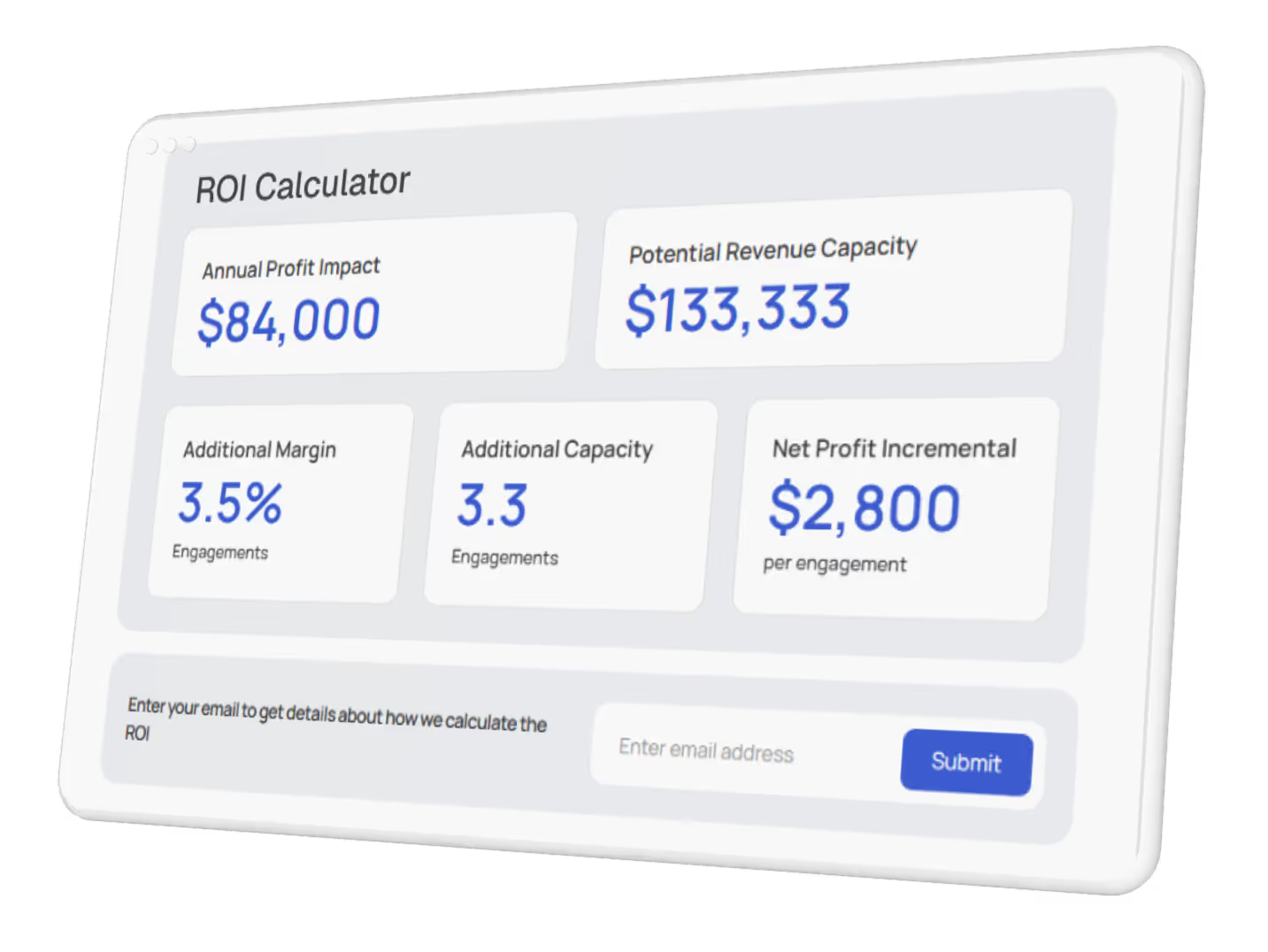
The insights generated by AI-driven audits are not just for compliance; they are strategic assets that inform better business decisions. By providing a clearer, more timely understanding of performance and risk, AI empowers leadership to make data-backed choices that drive growth and profitability. Surveys indicate that 64% of companies reported AI significantly improved productivity in audit and related processes, with 83% seeing positive ROI within 3 months, according to the Vention AI Market Report 2025.
The Thomson Reuters 2025 report estimated an average annual value gain of $19,000 per user in legal, tax, audit, and accounting fields, highlighting a combined $32 billion impact in the U.S. alone. This financial impact underscores the strategic importance of AI in auditing.
Core Components of AI Auditing
Effective AI-driven auditing relies on several interconnected components that work in synergy to deliver comprehensive insights. These components range from sophisticated data processing capabilities to advanced analytical models and robust governance frameworks.
Data Integration and Processing
The foundation of any AI audit is access to clean, comprehensive, and well-integrated data. AI systems require vast amounts of structured and unstructured data from various sources within an organization to perform their analyses effectively. This often involves integrating data from ERP systems, CRM platforms, financial ledgers, and other operational databases.
- Data Sourcing: Gathering data from diverse internal and external systems (e.g., financial, operational, market data).
- Data Cleansing and Standardization: Preparing data for AI analysis by removing inconsistencies, errors, and formatting issues.
- Data Lake/Warehouse: Establishing a centralized repository for storing and managing large volumes of audit-relevant data.
Without robust data integration and processing capabilities, even the most advanced AI technology cannot deliver accurate or meaningful insights. Organizations must invest in data infrastructure to support their AI audit initiatives.
Machine Learning Models and Algorithms
At the heart of AI auditing are machine learning (ML) models and algorithms designed to perform specific analytical tasks. These models are trained on historical data to learn patterns, identify anomalies, and make predictions. The choice of ML model depends on the specific audit objective, such as fraud detection, risk scoring, or compliance monitoring.
Common types of ML models used in auditing include:
Supervised Learning:Used for tasks like fraud detection, where models are trained on labeled data (e.g., known fraudulent transactions).
Unsupervised Learning:Employed for anomaly detection, where models identify unusual patterns without prior knowledge of what constitutes an anomaly.
Natural Language Processing (NLP):Used to analyze unstructured data like contracts, emails, and reports to extract relevant information and identify risks.
For example,Generative AI can streamline manual audits by automating document processing, extraction, and validation, leading to significant efficiency gains and improved accuracy.
Reporting and Visualization Tools
The insights generated by AI models must be presented in a clear, understandable, and actionable format for auditors and decision-makers. This requires sophisticated reporting and visualization tools that can translate complex analytical outputs into intuitive dashboards, charts, and alerts. Effective visualization is key to enabling faster, high-confidence decision-making.
These tools often include:
- Interactive Dashboards: Providing real-time views of key audit metrics, risk scores, and anomaly alerts.
- Customizable Reports: Generating detailed reports tailored to specific audit areas or stakeholder requirements.
- Alert Systems: Notifying auditors immediately of critical issues or deviations that require attention.
Transparent scoring and deeper analytics are crucial for auditors to trust and act upon AI-driven insights, ensuring that the technology genuinely supports better decision-making across every engagement.
Implementing an AI Audit Strategy
Implementing an AI audit strategy requires a structured approach, encompassing planning, technology adoption, and organizational change management. It's not merely about deploying AI technology but integrating it seamlessly into existing audit workflows and governance structures.
Strategic Planning and Pilot Programs
The first step involves defining clear objectives for AI adoption in auditing and identifying specific use cases where AI can deliver the most value. This often begins with pilot programs to test AI capabilities on a smaller scale, gather feedback, and demonstrate tangible benefits before a broader rollout. According to the 2025 NACD survey, 23% of public company boards have reevaluated corporate strategies to incorporate AI, indicating a growing strategic focus.
Key considerations for strategic planning:
- Identify High-Impact Areas: Focus on audit areas with high data volume, repetitive tasks, or complex risk patterns.
- Define Success Metrics: Establish clear KPIs for efficiency gains, accuracy improvements, and risk reduction.
- Start Small: Begin with a manageable pilot project to learn and refine the approach before scaling.
Technology Adoption and Integration
Selecting the right AI technology solutions and integrating them with existing IT infrastructure are critical. This involves choosing platforms that offer robust data processing, advanced analytics, and user-friendly interfaces. Compatibility with current systems and scalability for future needs are also important factors.
Steps for technology adoption:
- Vendor Selection: Evaluate AI audit platforms based on capabilities, security, and integration potential.
- Data Pipeline Development: Build automated processes for data extraction, transformation, and loading into AI systems.
- System Integration: Ensure seamless connectivity between AI tools and existing audit management software or ERP systems.
Companies like Dawgen Global have successfully applied AI audit methodologies, including risk scoping and adversarial testing, leading to improved credit fairness and reduced adversarial risks within three months.
Training and Skill Development
The successful implementation of AI in auditing heavily depends on the skills of the audit team. Auditors need to be trained not only on how to use AI tools but also on how to interpret AI-generated insights, understand model limitations, and apply critical thinking to AI outputs. This involves a shift in mindset from traditional auditing to a more technology-augmented approach.
Essential training areas include:
AI Literacy:Understanding fundamental AI concepts, capabilities, and ethical considerations.
Tool Proficiency:Hands-on training with specific AI audit software and platforms.
Data Interpretation:Developing skills to analyze AI outputs, identify false positives/negatives, and validate findings.

Managing Risks and Governance in AI Audits
While AI technology offers significant advantages, its deployment in auditing also introduces new risks that must be carefully managed through robust governance frameworks. These risks include data privacy concerns, algorithmic bias, model explainability, and regulatory compliance.
Establishing AI Governance Frameworks
A strong AI governance framework is essential to ensure that AI systems are used responsibly, ethically, and effectively in auditing. This involves defining policies, procedures, and oversight mechanisms for the entire AI lifecycle, from data acquisition to model deployment and monitoring. According to the 2025 NACD survey, 36% of public company boards have adopted an AI governance framework, indicating a growing recognition of this necessity.
Key elements of AI governance include:
- Ethical Guidelines: Ensuring AI systems adhere to ethical principles, avoiding bias and promoting fairness.
- Data Privacy Policies: Implementing strict controls over the use and protection of sensitive data processed by AI.
- Accountability Structures: Clearly defining roles and responsibilities for AI development, deployment, and oversight.
Addressing Algorithmic Bias and Explainability
Algorithmic bias can lead to unfair or inaccurate audit outcomes if AI models are trained on biased data or designed with inherent prejudices. Ensuring model explainability (the ability to understand how an AI system arrived at a particular conclusion) is crucial for auditors to trust and validate AI-driven insights, especially in critical decision-making processes.
Strategies for mitigating bias and improving explainability:
- Diverse Data Sets: Training AI models on diverse and representative data to minimize inherent biases.
- Bias Detection Tools: Using specialized tools to identify and quantify bias in AI models.
- Explainable AI (XAI) Techniques: Employing methods that provide transparency into AI decision-making processes, such as LIME or SHAP values.
The KPMG AI in Audit research emphasizes the importance of a trusted AI framework to navigate the new era of AI in financial reporting and audit.
Regulatory Compliance and Continuous Monitoring
The regulatory landscape for AI technology is rapidly evolving, with new standards and regulations emerging globally. Audit functions must ensure their AI implementations comply with relevant data protection laws (e.g., GDPR, CCPA), industry-specific regulations, and emerging AI-specific guidelines. Continuous monitoring of AI models is also vital to detect drift or performance degradation over time.
Aspects of regulatory compliance and monitoring:
- Compliance Audits: Regularly auditing AI systems for adherence to internal policies and external regulations.
- Model Performance Monitoring: Continuously tracking AI model accuracy, reliability, and potential biases in real-world applications.
- Automated Drift Detection: Implementing systems to alert when AI model performance deviates significantly from expected benchmarks.
The number of AI regulations doubled in 2024, according to the 2025 AI Index Report by Stanford HAI, highlighting the increasing importance of regulatory compliance.
The Future of AI in Auditing
The trajectory of AI technology in auditing points towards increasingly sophisticated applications, greater integration, and a fundamental transformation of the audit profession. As AI capabilities advance, auditors will be empowered to deliver even more strategic value, moving beyond traditional assurance to become proactive advisors.
Emerging AI Technology Trends
Several AI technology trends are poised to shape the future of auditing. These include the widespread adoption of generative AI, advancements in explainable AI, and the integration of AI with blockchain for enhanced data integrity and traceability.
Key emerging trends:
- Generative AI for Report Generation: Automating the drafting of audit reports, summaries, and explanations based on AI-driven findings.
- Enhanced Explainable AI (XAI): Developing more intuitive and accessible methods for auditors to understand AI decision-making processes.
- AI-Blockchain Synergy: Leveraging blockchain for immutable audit trails and using AI to analyze blockchain data for anomalies.
The global AI market, valued at about $391 billion in 2025, is projected to surpass $1.8 trillion soon, growing annually at rates around 28-30%, as reported by Exploding Topics AI Statistics 2024-2025, indicating vast potential for innovation.
Continuous Auditing and Real-time Insights
The vision of continuous auditing, where financial transactions and operational data are monitored in real-time, is becoming a reality with AI. This shift allows for immediate detection of issues, reducing the time between an event and its identification, and enabling proactive intervention.Harnessing artificial intelligence to deliver real-time intelligence is transforming how organizations manage risk and ensure compliance.
Benefits of continuous auditing:
- Proactive Risk Management: Identifying and addressing risks as they emerge, rather than after they have materialized.
- Enhanced Compliance: Ensuring ongoing adherence to regulatory requirements through continuous monitoring.
- Dynamic Decision Support: Providing real-time data and insights to support agile business decisions.
Omnia's continuous audit monitoring with ML algorithms resulted in a 40% reduction in audit review errors and improved audit quality, showcasing the impact of real-time insights.
The Evolving Role of the Auditor
As AI technology takes over more routine and data-intensive tasks, the role of the auditor will evolve. Auditors will transition from data gatherers and checkers to strategic advisors, focusing on interpreting complex AI insights, providing business context, and offering high-value recommendations. This requires a shift towards skills in data science, critical thinking, and strategic communication.
New auditor competencies will include:
- Data Science Acumen: Understanding data structures, analytical methods, and AI model outputs.
- Critical Evaluation of AI: Assessing the reliability, limitations, and ethical implications of AI-driven insights.
- Strategic Advisory: Translating audit findings into actionable business strategies and recommendations.
Conclusion
Implementing AI-driven audit insights is no longer an option but a strategic imperative for organizations aiming to enhance decision-making, improve efficiency, and effectively manage risk. The transformative power of AI technology allows auditors to process vast datasets, detect anomalies, and provide real-time intelligence, moving beyond traditional, periodic assessments. While challenges such as data quality and algorithmic bias exist, robust governance frameworks and continuous skill development can mitigate these risks.
As the audit profession continues to evolve, AI will empower auditors to become more strategic advisors, delivering deeper, more actionable insights that drive business value. Embracing AI is about future-proofing the audit function, ensuring it remains relevant, accurate, and capable of meeting the complex demands of the modern business landscape. The journey towards AI-driven auditing is a continuous one, promising significant returns for those who invest in its strategic implementation.