



TL;DR
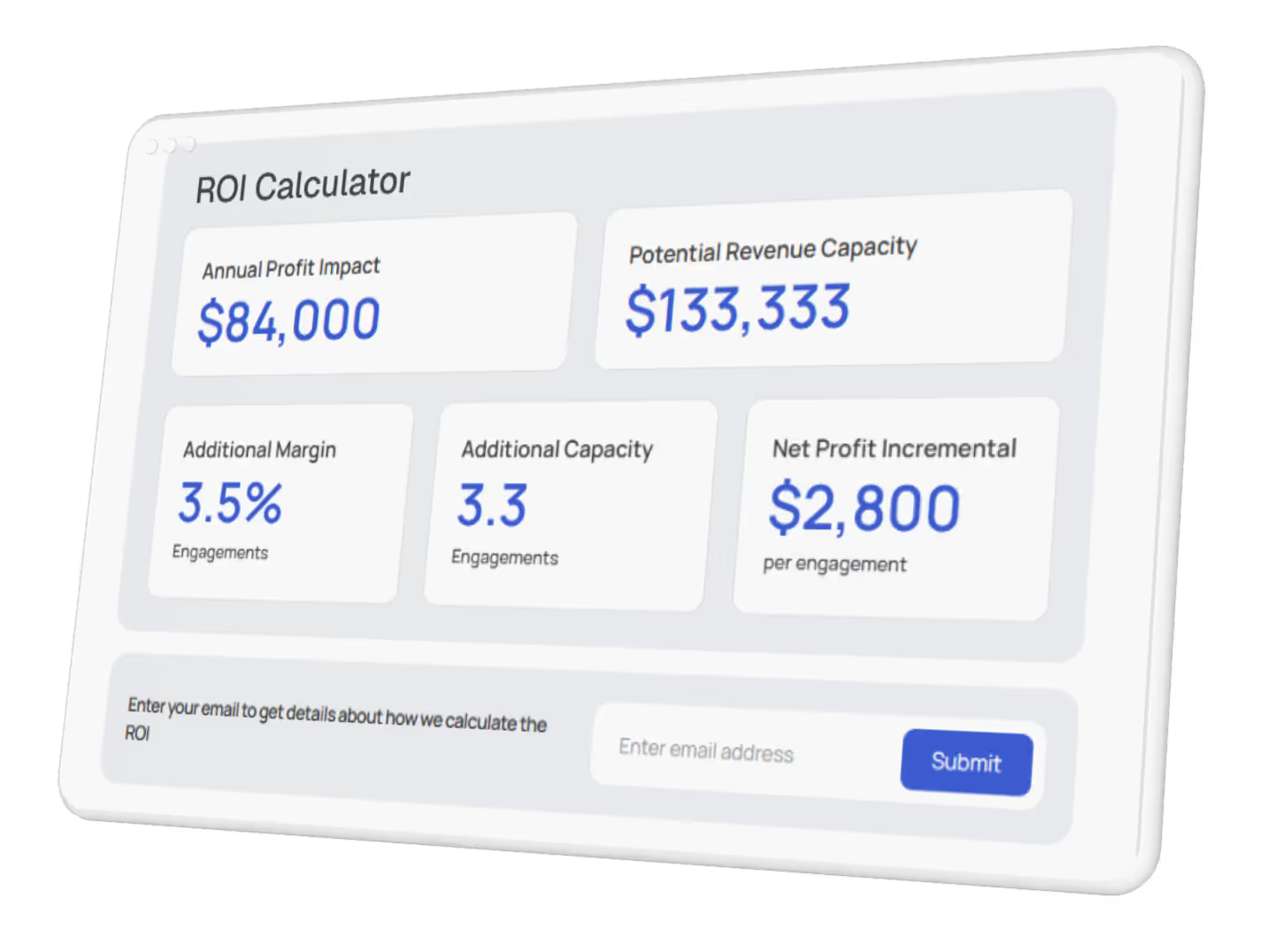
Intelligent audit consoles, like Finspectors.ai, significantly improve audit review speed, accuracy, and consistency by leveraging AI, machine learning, and automation. They achieve this through features such as automated data ingestion, AI-powered anomaly detection, workflow automation, and real-time monitoring, enabling faster issue resolution and reducing manual effort. This technology helps organizations achieve faster audit cycles, reduce costs, and enhance risk management, with some users seeing over 5 million in annual savings and a 1,906% ROI.
Understanding Audit Review Challenges
Audit review processes, traditionally manual and labor-intensive, often face significant hurdles that impede efficiency and accuracy. These challenges can lead to extended timelines, increased costs, and potential oversight of critical issues. Addressing these bottlenecks is crucial for organizations aiming to maintain compliance and gain timely insights.
One primary challenge stems from the sheer volume and complexity of data that auditors must sift through. Organizations generate vast amounts of financial and operational data, making it difficult for human auditors to process everything efficiently. This often results in sampling, which, while necessary, can introduce risks of missing important details.
Common Obstacles in Traditional Audit Reviews
Traditional audit reviews are frequently hampered by several factors, including disparate data sources, manual data entry, and a lack of real-time visibility. These issues collectively contribute to slower review cycles and a higher potential for errors.
- Data Silos: Information often resides in multiple, unconnected systems, requiring manual aggregation and reconciliation. This fragmentation slows down data collection and analysis, making it harder to get a holistic view of an organization's financial health.
- Manual Processes: Many review steps, from document collection to discrepancy identification, rely on human effort. This not only increases the time taken but also introduces human error, impacting the accuracy of the audit.
- Lack of Real-time Insights: Traditional methods often provide insights retrospectively, meaning issues are identified long after they occur. This limits the ability to take proactive measures and can delay critical business decisions.
Impact on Audit Quality and Timeliness
The consequences of these challenges extend beyond just speed. They can directly affect the quality of the audit, the reliability of financial reporting, and an organization's ability to respond to market changes or regulatory demands. For instance, the Public Company Accounting Oversight Board (PCAOB) reported a 46% overall Part I.A deficiency rate in 2023, highlighting the need for improved audit processes.
Slow audit reviews can also delay the release of financial statements, impacting investor confidence and compliance deadlines. The demand for greater transparency and forward-looking risk forecasting, prioritized by 47% of clients in 2025 according to Circit, underscores the urgency for faster, more insightful audits.
Intelligent Audit Consoles Defined
Intelligent audit consoles represent a significant evolution in audit technology, moving beyond basic automation to integrate advanced analytics, artificial intelligence (AI), and machine learning (ML) capabilities. These platforms are designed to centralize audit activities, streamline workflows, and provide auditors with powerful tools to analyze data more efficiently and effectively.
At their core, intelligent audit consoles act as a single pane of glass for managing the entire audit lifecycle. They ingest data from various sources, apply sophisticated algorithms to identify patterns and anomalies, and present actionable insights through intuitive dashboards. This transformation shifts the auditor's role from data gatherer to strategic analyst, focusing on higher-value tasks.
Core Components of an Intelligent Audit Console
An effective intelligent audit console integrates several key technological components to deliver its benefits. These components work in concert to automate repetitive tasks, enhance data analysis, and improve decision-making.
Automated Data Ingestion:Connects to diverse enterprise systems (ERP, CRM, financial ledgers) to automatically pull relevant data, eliminating manual data entry and reducing errors.
AI-Powered Anomaly Detection:Utilizes machine learning algorithms to scan large datasets for unusual transactions, deviations from norms, or potential fraudulent activities that human auditors might miss.
Workflow Automation:Automates routine audit tasks such as document requests, evidence collection, and report generation, freeing up auditors for more complex analysis.
Centralized Data Management:Provides a single, secure repository for all audit-related data, ensuring data integrity and accessibility for all team members.
How They Differ from Traditional Audit Software
While traditional audit software often provides tools for documentation and basic data analysis, intelligent audit consoles offer a more proactive and predictive approach. They are not just about organizing information; they are about interpreting it and guiding the audit process.
- Proactive vs. Reactive: Traditional software is largely reactive, helping to document findings after the fact. Intelligent consoles are proactive, identifying risks and anomalies in real-time or near real-time.
- Predictive Analytics: Intelligent consoles often incorporate predictive models to forecast potential risks or future audit areas, a capability largely absent in older systems.
- Continuous Auditing: They enable continuous monitoring of controls and transactions, allowing for issues to be addressed as they arise, rather than waiting for periodic reviews. This aligns with the growing adoption of AI-powered tools and real-time auditing approaches in 2025.
Key Features Accelerating Reviews
The speed improvements offered by intelligent audit consoles are directly attributable to their advanced feature sets. These tools are engineered to streamline every stage of the audit process, from planning and data collection to analysis and reporting, significantly reducing the time required for comprehensive reviews.
One of the most impactful features is the ability to automate routine and repetitive tasks. By offloading these to the console, auditors can dedicate more time to critical thinking, complex problem-solving, and strategic analysis, which are areas where human expertise is indispensable. This shift not only accelerates the audit but also enhances its overall quality and depth.
Workflow Automation and Real-time Monitoring
Workflow automation is a cornerstone of intelligent audit consoles, allowing for predefined audit steps to be executed automatically. Real-time monitoring complements this by providing continuous oversight, ensuring that controls are functioning as intended and flagging deviations immediately.
- Automated Evidence Collection: Systems can automatically pull documents, transaction logs, and other evidence from source systems based on predefined criteria, eliminating manual requests and follow-ups.
- Automated Testing of Controls: Intelligent consoles can automatically test the effectiveness of internal controls against established benchmarks, providing instant feedback on their operational status.
- Continuous Transaction Monitoring: Real-time feeds allow for the continuous analysis of transactions, enabling the detection of anomalies or policy violations as they occur, rather than during a post-period review.
For example,Intelligent Audit's platform automates invoice auditing by checking over 150 data points per invoice, flagging errors and recovering overcharges without manual intervention.
Advanced Analytics and Anomaly Detection
The analytical prowess of intelligent audit consoles is a major driver of improved review speed. They can process and analyze vast datasets far more quickly and thoroughly than human auditors, uncovering insights that might otherwise remain hidden.
- Big Data Processing: Consoles are built to handle and analyze millions of data points, identifying trends, correlations, and outliers across an entire organization's data landscape.
- Predictive Modeling: Using historical data, these tools can predict potential areas of risk or future audit concerns, allowing auditors to focus their efforts proactively.
- Root Cause Analysis: When anomalies are detected, the console can often assist in tracing back to the root cause, providing auditors with a head start on investigation.
Andrew Simcox of Intelligent Audit highlighted this capability, stating, "By analyzing one customer’s millions of next-day air shipments, I identified opportunities to shift shipments to next-day air saver or even ground services without impacting delivery times, resulting in over $1 million in annual savings for the customer," as noted in SDCExec.
Implementing Consoles for Speed
Successfully integrating an intelligent audit console into existing operations requires a strategic approach. It's not merely about purchasing software, but about transforming audit practices, processes, and the mindset of the audit team. The goal is to leverage the console's capabilities to achieve measurable improvements in audit review speed and efficiency.
A phased implementation, starting with pilot projects, can help organizations gradually adapt to the new technology and identify any integration challenges early on. Training and change management are also critical to ensure that auditors are proficient in using the new tools and understand how their roles will evolve.
Strategic Implementation Steps
To maximize the speed benefits of an intelligent audit console, organizations should follow a structured implementation plan. This involves careful planning, stakeholder engagement, and continuous optimization.
- Assess Current Processes: Identify existing bottlenecks and areas where manual effort is highest. This provides a baseline for measuring improvement and targets for automation.
- Data Integration Planning: Map out all relevant data sources and plan for seamless, secure integration with the console. This is crucial for the console's analytical capabilities.
- Pilot Program Execution: Start with a smaller, manageable audit area to test the console's functionality, gather feedback, and refine processes before a broader rollout.
- Training and Skill Development: Provide comprehensive training for auditors on how to use the console's features, interpret its outputs, and adapt to data-driven auditing.
The case study of a large global manufacturer, which achieved $15.4 million in annualized savings and a 1,906% ROI, demonstrates the impact of systematic implementation, including three-way contractual auditing and AI-powered anomaly detection.
Overcoming Integration Challenges
Integrating new technology can present challenges, especially in complex IT environments. Addressing these proactively is key to a smooth transition and rapid realization of benefits.
- Legacy System Compatibility: Ensure the console can integrate with older, proprietary systems. This may require custom APIs or middleware solutions.
- Data Quality Issues: Poor data quality in source systems can hinder the console's effectiveness. Prioritize data cleansing and standardization efforts before full integration.
- Change Management: Auditors may be resistant to new technologies. Emphasize the benefits, provide ample support, and involve them in the implementation process to foster adoption.
For instance, a national law firm saved$3 million+ per year by optimizing its parcel carrier sourcing strategy using Intelligent Audit’s self-serve modeling tools, highlighting the importance of leveraging advanced reporting and analytics for rapid decision-making.
Measuring Impact and ROI
Quantifying the benefits of an intelligent audit console is essential for demonstrating its value and securing continued investment. Measuring the impact goes beyond just tracking audit completion times; it encompasses improvements in accuracy, risk detection, and the overall strategic contribution of the audit function.
Organizations should establish clear key performance indicators (KPIs) before implementation to objectively assess the console's effectiveness. These KPIs should align with strategic business objectives, such as reducing compliance costs, improving financial reporting reliability, or enhancing risk management capabilities.
Key Performance Indicators for Audit Speed
Several metrics can be used to gauge the improvement in audit review speed and efficiency. These KPIs provide tangible evidence of the console's impact on operational timelines.
- Audit Cycle Time: The total time taken from the start of an audit to its final report. Intelligent consoles aim to significantly reduce this duration.
- Time to Issue Resolution: How quickly identified audit findings or discrepancies are investigated and resolved. Automation and real-time monitoring accelerate this process.
- Manual Effort Reduction: The percentage decrease in hours spent on manual tasks like data collection, reconciliation, and basic testing.
- Report Generation Speed: The time taken to compile and finalize audit reports, which can be dramatically cut down by automated reporting features.
The PCAOB reports that inspection results are now released about five months sooner, indicating accelerated audit review cycles enabled by improved technology and workflows.
Calculating Return on Investment (ROI)
The ROI of an intelligent audit console can be substantial, encompassing both direct cost savings and indirect benefits such as improved risk management and enhanced decision-making. Calculating ROI helps justify the initial investment.
The ability to transform data into actionable insights that save time, money, and headaches is a core tenet of platforms like Intelligent Audit, underscoring the comprehensive value proposition.
Future Trends in Audit Automation
The landscape of audit is continuously evolving, with intelligent audit consoles at the forefront of this transformation. Looking ahead, several trends indicate a deeper integration of advanced technologies, further enhancing audit review speed, accuracy, and strategic value. These trends are driven by increasing data volumes, regulatory complexities, and the demand for more dynamic and predictive audit functions.
The shift towards continuous auditing and real-time assurance is perhaps the most significant. This paradigm moves away from periodic, historical reviews to ongoing monitoring, allowing for immediate identification and remediation of issues. This proactive approach not only improves audit speed but also strengthens an organization's overall control environment.
Emerging Technologies and Their Impact
New technologies are constantly being developed and integrated into intelligent audit consoles, promising even greater efficiencies and capabilities. These innovations will redefine what is possible in audit review.
- Generative AI: Beyond anomaly detection, generative AI could assist in drafting audit reports, summarizing findings, and even suggesting audit procedures based on context.
- Blockchain for Audit Trails: Distributed ledger technology could provide immutable and transparent audit trails, simplifying data verification and enhancing trust in financial records.
- Robotic Process Automation (RPA) Expansion: RPA will continue to automate more complex, multi-step processes within the audit workflow, further reducing manual intervention.
- Enhanced Predictive Analytics: Leveraging larger datasets and more sophisticated algorithms, consoles will offer even more precise risk forecasting and scenario analysis.
The 2025 financial audit trends highlight the growing adoption of AI-powered tools and continuous auditing, which enable auditors to test controls earlier and resolve issues faster.
The Rise of Continuous Auditing and Assurance
Continuous auditing, facilitated by intelligent consoles, is becoming a standard expectation rather than a futuristic concept. This approach provides ongoing assurance, which is invaluable in fast-paced business environments.
- Real-time Risk Assessment: Systems continuously monitor transactions and controls, providing an up-to-the-minute view of an organization's risk profile.
- Proactive Issue Resolution: Deviations are flagged immediately, allowing for prompt investigation and correction, preventing minor issues from escalating.
- Dynamic Audit Planning: Audit plans can be adjusted dynamically based on real-time risk assessments, ensuring resources are always focused on the most critical areas.
The 2025 North American Pulse of Internal Audit indicates that audit functions are increasingly leveraging IT and cybersecurity expertise, reflecting a move towards more digitally-driven and continuous audit processes.

Best Practices for Adoption
Adopting intelligent audit consoles successfully requires more than just technological implementation; it demands a holistic approach that considers people, processes, and technology. Organizations that follow best practices are more likely to achieve significant improvements in audit review speed and overall audit effectiveness.
A key best practice involves fostering a culture of continuous improvement and digital literacy within the audit team. This ensures that auditors are not only comfortable with new tools but are also actively seeking ways to leverage them for greater insights and efficiencies.
Optimizing Console Utilization for Maximum Speed
To fully capitalize on the speed benefits of an intelligent audit console, organizations should focus on optimizing its utilization through strategic configuration and ongoing refinement.
- Customize Dashboards and Reports: Tailor the console's interface and reporting features to the specific needs and priorities of the audit team and stakeholders.
- Regularly Update Algorithms: Ensure that AI and ML algorithms are continuously trained with new data to improve their accuracy in anomaly detection and risk assessment.
- Integrate with Other Systems: Maximize data flow by integrating the console with other enterprise systems (e.g., GRC, ERP) to create a unified data ecosystem.
- Automate Claim Recovery: Use platforms that automatically process claims for recovery of overcharges, as exemplified by Intelligent Audit's system, reducing manual effort in financial operations.
The use of self-serve modeling tools to evaluate carrier contracts and optimize sourcing, as demonstrated by a law firm, is another example of optimizing console utilization for rapid decision-making.
Training and Skill Development for Auditors
The human element remains critical in intelligent auditing. Investing in the development of auditors' skills is paramount to unlocking the full potential of these advanced consoles.
- Data Analytics Proficiency: Train auditors to interpret complex data visualizations, understand statistical analysis, and derive meaningful insights from large datasets.
- AI/ML Literacy: Educate auditors on the fundamentals of AI and machine learning, enabling them to understand how the console's algorithms work and how to best leverage them.
- Critical Thinking and Problem-Solving: With automation handling routine tasks, auditors need to sharpen their critical thinking skills to investigate complex anomalies and provide strategic recommendations.
- Remote Audit Execution: Equip auditors with the skills and tools for effective remote auditing, which is increasingly facilitated by intelligent consoles, as noted by the 2025 North American Pulse of Internal Audit.
By focusing on these best practices, organizations can ensure that their investment in intelligent audit consoles translates into tangible improvements in audit review speed, accuracy, and overall strategic value.
The PCAOB reported a drop in the overall Part I.A deficiency rate from 46% to 39% in 2024, partly attributed to technology-enabled tools like intelligent audit consoles.
Conclusion
The journey to improve audit review speed is intrinsically linked to the adoption and effective utilization of intelligent audit consoles. These advanced platforms, powered by AI and automation, are transforming the audit landscape by addressing long-standing challenges related to data volume, manual processes, and the need for real-time insights. By centralizing data, automating workflows, and providing sophisticated analytical capabilities, intelligent consoles empower auditors to conduct more efficient, accurate, and insightful reviews.
The measurable benefits, including reduced audit cycle times, significant cost savings, and enhanced risk mitigation, underscore the strategic value of these technologies. As the audit profession continues to evolve towards continuous auditing and predictive assurance, intelligent audit consoles will remain at the forefront, enabling organizations to meet the growing demands for transparency, compliance, and timely financial intelligence. Embracing these tools is not just about speed; it's about elevating the entire audit function to a more strategic and proactive role within the enterprise.