



TL;DR
Integrating audit platforms with accounting systems eliminates data silos and reduces manual reconciliation work. APIs, middleware, and direct connections enable real-time data access and streamlined workflows when implemented with clear governance.
Why Audit - Accounting Integration Matters
Integrating audit platforms with accounting systems is no longer a luxury but a necessity for modern audit teams, finance managers, and IT professionals. The persistent issue of data silos - isolated data sets within an organization - hinders efficiency, accuracy, and strategic decision-making in the audit-accounting context. These silos lead to significant time wasted on manual data transfer, error-prone reconciliations, and delayed reviews, ultimately impacting an organization's bottom line. By achieving seamless integration, organizations unlock benefits such as real-time data access, automated evidence collection, and streamlined workflows. This article provides a practical roadmap to eliminate data silos and achieve synergy by unifying risk, audit, and operations.
Understanding the Audit-Accounting Data Silo Problem
Data silos create substantial friction in audit and accounting processes. Common scenarios include arduous evidence requests, reconciliation delays, and version control issues that plague teams. For instance, 49% of auditors report time-consuming reconciliations as a major challenge with Excel-based processes, while 42% cite manual data entry errors. Technical barriers often contribute to these silos:
- Legacy accounting systems lacking modern API capabilities.
- Incompatible data formats between different software platforms.
- Limitations in existing APIs for comprehensive data exchange.
Organizational barriers also play a role, such as departmental separation, security concerns over data sharing, and resistance to change. The real costs are significant: audit cycle delays, increased compliance risks, and inefficient resource allocation. Manual processes consume a substantial portion of audit season, with 52% of respondents estimating their teams spend between 30% and 50% of their time on administrative tasks. Moreover, poor data quality from silos costs organizations an average of $12.9 million annually.
Key Integration Methods: APIs, Middleware, and Direct Connections
Selecting the right integration method is crucial for connecting audit platforms with accounting systems. Each approach offers distinct advantages and is suited for different scenarios.
- API-based integrations leverage Application Programming Interfaces, often REST APIs, to allow modern platforms to communicate and exchange data in real-time. This method is highly efficient for continuous data synchronization and is favored by modern cloud-based accounting and audit solutions. Real-time accounting APIs have reduced revenue recognition errors by 58% in SaaS platforms and can save finance teams 79 minutes daily on manual tasks. Finspectors, for example, leverages robust API-based integrations for seamless connectivity, ensuring auditors have access to the most current financial data.
- Middleware solutions, specifically iPaaS (Integration Platform as a Service) platforms, are suitable for complex environments involving multiple systems, heterogeneous applications, and varying data formats. These platforms act as a central hub, orchestrating data flows between disparate systems. Examples include Boomi and Celigo, offering pre-built connectors and transformation capabilities. The iPaaS market is projected to grow from $15.63 billion in 2025 to $78.28 billion by 2032.
- Direct database connections involve establishing a direct link between the audit platform and the accounting system's database. This method offers granular control over data but requires careful security considerations and deep technical expertise. It's typically used when APIs are unavailable or insufficient, or for specific, high-volume data transfers. However, it can be more complex to maintain and scale.
- File-based integrations, such as CSV or Excel imports/exports, serve as fallback options. While simple to implement, they are prone to manual errors, version control issues, and lack real-time capabilities. These methods should be minimized due to their inherent drawbacks, as Excel spreadsheets remain a major source of organizational pain through version control issues and limited collaboration capabilities.
A Hybrid Approach combines multiple methods to optimize integration for different data types and systems. For instance, using APIs for real-time transactional data, middleware for complex data transformations, and direct connections for legacy systems.
This table compares the four primary integration approaches for connecting audit platforms with accounting systems, helping teams select the right method based on their technical environment, data needs, and resources.
| Integration Method | Best For | Real-Time Capability | Technical Complexity | Security Level | Maintenance Requirements |
|---|---|---|---|---|---|
| API-Based Integration | Modern cloud systems (e.g., QuickBooks, Xero) | High (near real-time) | Moderate to High | High (OAuth, API keys, encryption) | Moderate |
| Middleware/iPaaS Platform | Complex multi-system environments, diverse applications | High | Moderate | High (centralized management) | Moderate |
| Direct Database Connection | Legacy systems without APIs, specific high-volume transfers | High | High | High (requires strict controls) | High |
| File-Based Import/Export | Ad-hoc data exchange, small datasets, last resort | Low (batch processing) | Low | Low (manual handling risks) | High (error-prone) |
| Hybrid Approach | Optimizing for varied system landscape and data needs | Variable (mix of methods) | Variable | Variable | Variable |
Step-by-Step Integration Planning Framework
A structured approach is essential for successful integration. Finspectors recommends the following framework:
- Assess Current State: Inventory all existing accounting and audit systems, map current data flows, and identify pain points such as manual data entry or reconciliation delays. Understand which systems are critical and which are secondary.
- Define Integration Requirements: Clearly articulate what data needs to flow between systems, the required frequency (e.g., real-time, daily, weekly), and critical security needs. This includes identifying specific reports, transactions, and supporting documents.
- Select Integration Approach: Based on technical capabilities (e.g., API availability, system age) and business priorities (e.g., budget, timeline, real-time needs), choose the most appropriate integration method(s) from APIs, middleware, direct connections, or a hybrid model.
- Build Cross-Functional Team: Assemble a diverse team including IT specialists (for technical implementation and security), audit professionals (to define data requirements and testing), finance managers (for accounting system expertise), and compliance officers (to ensure regulatory adherence). This collaboration is vital for overcoming integration challenges.
Technical Implementation Best Practices
Implementing integrations requires meticulous attention to detail to ensure data integrity and security.
- Data mapping is a critical step, involving the alignment of various data elements such as chart of accounts, transaction codes, and entity structures between systems. This ensures consistency and accuracy across platforms. Finspectors' approach to secure data mapping and validation helps bridge these gaps seamlessly.
- Authentication and security are paramount, especially when dealing with sensitive financial data. Best practices include using OAuth for secure authorization, API keys for access control, role-based access to limit data visibility, and robust encryption standards for data in transit and at rest. The financial services sector faces increasing API security challenges, with attacks targeting financial services web and API applications increasing by 51% in just six months.
- Error handling and monitoring are essential for maintaining continuous operation. Implement comprehensive logging, set up alerts for failed syncs, and establish rollback procedures to revert systems to a stable state if errors occur. 68% of respondents reported an average detection time for data incidents of four hours or more, highlighting the need for robust monitoring.
- Testing protocols should involve sandbox environments for development and testing, rigorous validation checks to ensure data accuracy, and parallel runs before full go-live. This minimizes disruption and builds confidence in the new integration.
Ensuring Data Quality and Governance Post-Integration
Integration is not a one-time project; it requires ongoing data quality and governance.
- Data validation rules - Ensure completeness, format consistency, and reconciliation controls. This includes automated checks and manual reviews where necessary. Poor data quality costs organizations an average of $12.9 million to $15 million annually, emphasizing the importance of validation.
- Audit trails - Create comprehensive trails to track data lineage from the accounting system through the audit platform. This is crucial for compliance and transparency. Finspectors maintains comprehensive audit trails for integrated data, providing a complete history of data movement and changes. Institutions with integrated platforms make compliance decisions three times faster than those with disconnected systems.
- Ownership and accountability - Define clear ownership for maintaining data mappings, resolving sync errors, and updating configurations. Regular reviews, such as quarterly audits of integration performance and data accuracy, are vital.
Overcoming Common Integration Challenges
Integrating audit and accounting systems often presents hurdles, but solutions exist.
- Legacy system limitations are common, as many older accounting systems lack modern APIs. For systems without modern APIs, workarounds include using middleware solutions, direct database connections, or scheduled file exports. However, 85% of IT leaders cite legacy systems as barriers to new solutions, sometimes making system upgrades a more strategic long-term solution.
- Data volume and performance can be challenging, especially for large organizations. Optimize sync schedules, using incremental loads for daily updates and full loads only when necessary. Incremental sync processes only new or changed data, significantly reducing load times compared to full sync. Xero, for example, has a limit of 5,000 API calls per day.
- Change management is critical for successful adoption. Train teams thoroughly, update procedures, and manage the transition period with clear communication. BDO USA's 2025 Audit Innovation Survey highlights that 81% of finance leaders trust audit firms using advanced technologies, indicating a growing acceptance of tech-driven audit processes.
- Vendor cooperation is often necessary. Work closely with accounting software providers to understand their integration capabilities and advocate for improved API access. For example, the "Technology Assisted Analysis" standard takes effect for financial statement audits beginning December 15, 2025, signaling regulatory emphasis on modernizing audit methodologies. This encourages vendors to enhance their integration offerings.
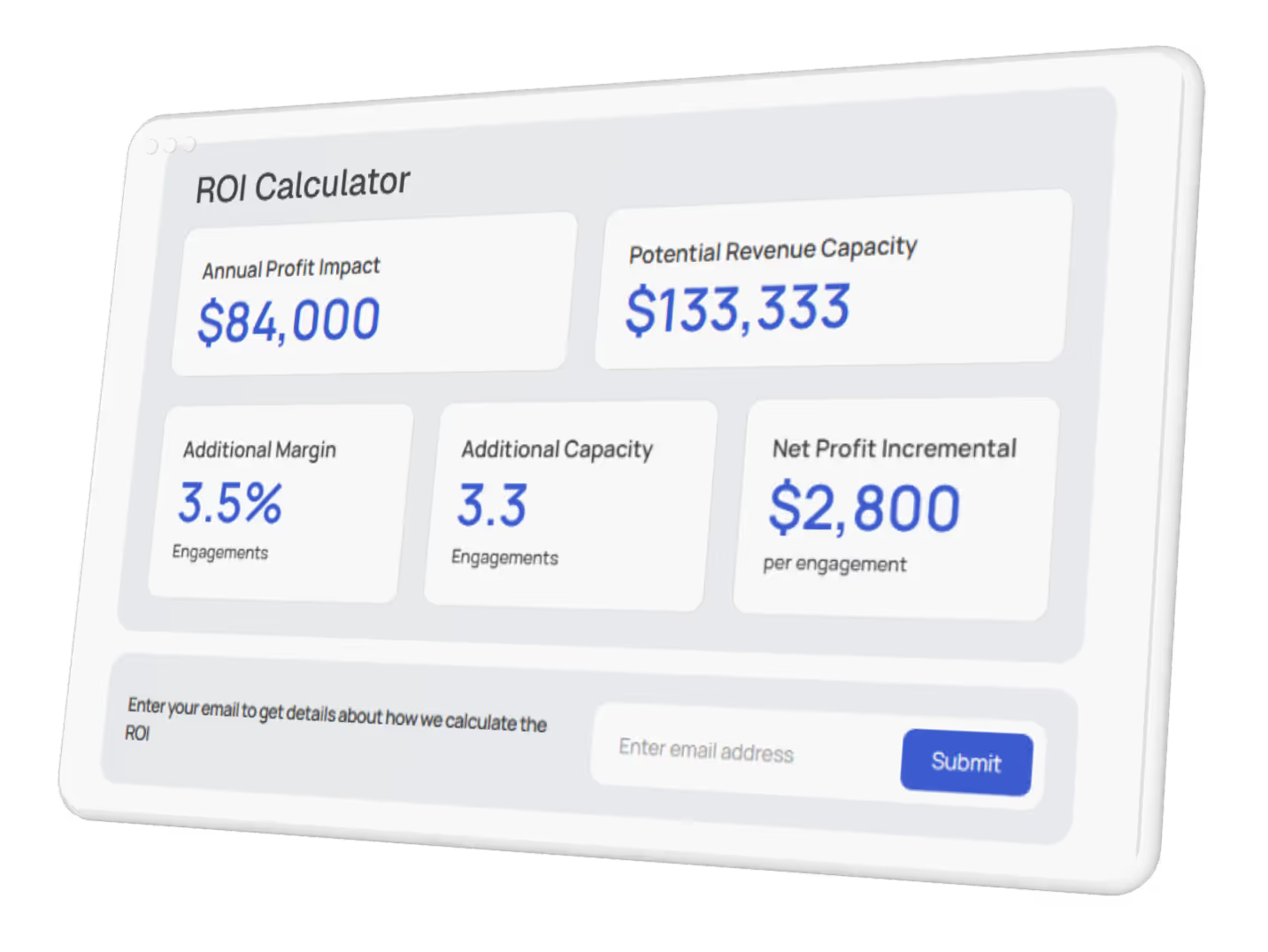
Measuring Integration Success and ROI
Quantifying the benefits of integration helps justify investment and drive continuous improvement.
Key metrics include time saved on data collection, reduction in error rates, and compression of the audit cycle. AuditBoard customers reported 83% more efficient control mapping and 63% more efficient real-time data reporting. Deloitte notes nearly 40% of Chief Audit Executives (CAEs) plan GenAI investments to enhance efficiency across audit cycles.
Qualitative benefits include increased auditor satisfaction, reduced frustration from manual tasks, and improved collaboration between audit and accounting teams. This leads to a more strategic focus, as auditors can spend less time on grunt work and more on judgment.
A cost analysis should compare the integration investment against the ongoing costs of manual processes. Organizations using AI-powered data integration achieve an average 3.7x ROI, with top performers reaching 10.3x ROI. Continuous improvement uses these metrics to identify further optimization opportunities, ensuring the integration evolves with business needs. To redefine the audit workflow with data analytics, consider how solutions for full data audit testing automation can further enhance efficiency.
Key Takeaways
- Data silos between audit and accounting systems lead to inefficiencies and compliance risks.
- Modern integration (APIs, middleware) offers real-time data access and automated evidence collection.
- Planning: A structured framework and cross-functional teams are essential for success.
- Technical best practices: Robust data mapping, security, and error handling are critical.
- Ongoing: Data quality monitoring and governance ensure long-term success.
- ROI: Integration yields measurable gains in time savings, error reduction, and cycle times.
Conclusion
The journey from disconnected, error-prone manual processes to automated, reliable data flows between audit and accounting systems is transformative. By embracing modern integration strategies, organizations can streamline evidence collection, automate risk scoring, and accelerate financial reviews. This allows audit teams to focus on critical judgment rather than tedious grunt work. Integration is an ongoing journey that requires continuous maintenance and optimization. Starting with high-impact integrations and expanding incrementally is often the most effective approach. Finspectors enables these integrations through intelligent automation and native accounting system connectors, empowering audit teams to achieve faster reviews, sharper insights, and seamless collaboration.