



TL;DR
Effectively transitioning to AI-augmented audits involves a phased integration of AI for tasks like data extraction and continuous monitoring, fostering human-AI collaboration where AI handles data processing and auditors provide judgment, and addressing the skills gap through training. Key drivers for success include training (45%), dedicated AI technologies (27%), and robust governance, with solutions like Finspectors.ai automating data fundamentals and reconciliation to achieve significant ROI, such as a 40% reduction in audit cycles and up to 45% improved fraud detection.
The Audit Renaissance: Why AI Now?
Let's face it, the world of auditing isn't exactly known for its thrilling plot twists. AI is changing that narrative faster than you can say "material misstatement." The transition from traditional, often manual, auditing practices to AI-augmented audits isn't just a trend; it's a strategic imperative.
The numbers don't lie: the internal audit profession is diving headfirst into AI. This puts the sector on track for an impressive 100% adoption growth, aiming to reach 80% by 2026, according to Wolters Kluwer.
Why the Sudden Urge to Augment?
The push for AI technology in audits isn't purely academic. Organizations that have embraced AI adoption strategies are literally twice as likely to experience revenue growth compared to those still on the sidelines, as highlighted by Thomson Reuters.
- Competitive Edge: Early adopters are already seeing significant ROI and market advantages.
- Regulatory Pressure: The increasing complexity of regulations demands more sophisticated oversight.
- Talent Attraction: Modern audit functions attract and retain top talent by offering cutting-edge tools.
Strategic Pillars for AI Adoption
Transitioning to AI-augmented audits isn't a flip of a switch; it's a carefully orchestrated journey. Think of it as building a magnificent, data-driven skyscraper - you need solid foundations. The most effective method involves a phased integration approach, combining automated routine task handling, real-time anomaly detection, and continuous monitoring, all underpinned by robust human oversight and domain expertise.
Phased Integration: A Smart Approach
Jumping straight into full AI automation can be daunting, and frankly, a recipe for disaster. Many firms, like KPMG with its Clara platform, start with specific, high-impact areas before expanding.
Start Small with Routine Automation:Begin by automating mundane, repetitive tasks. This could include data extraction, classification, and reconciliation. Tools like Trullion, as deployed by MHM, automate data entry and reconciliation, leading to significant time savings and improved audit quality.
Incorporate Continuous Monitoring:Once routine tasks are streamlined, integrate AI for ongoing surveillance. This means moving beyond annual audits to real-time alerts on anomalies or compliance deviations.Baker Tilly, for instance, saw a 50% decrease in compliance breaches by implementing continuous AI-driven compliance monitoring systems.
Embed AI Platforms into Methodologies:The ultimate goal is to weave AI tools directly into your core audit methodologies. This includes using AI for risk assessment, fraud detection, and transaction scoring, as exemplified by KPMG Clara and MindBridge.
Key Drivers for Successful Adoption
Beyond the phased approach, certain factors consistently emerge as critical for successful AI integration. According to Wolters Kluwer's survey,45% of respondents identified training in AI skills and tools as the greatest positive impact on increasing AI adoption. This underscores that technology alone isn't enough; the human element is paramount.
Human-AI Collaboration: The Secret Sauce
Here's the kicker: AI isn't here to replace auditors. The most effective transition isn't about AI taking over, but about fostering a symbiotic relationship where AI handles the heavy lifting and pattern recognition, while human auditors provide the critical judgment, skepticism, and strategic insight.
Augmentation, Not Automation
Think of AI as your super-smart intern who never sleeps, never complains, and can sift through petabytes of data in seconds. KPMG, for example, explicitly emphasizes a “human-in-the-loop” approach with its Clara platform to sustain professional skepticism and accuracy.
- Professional Skepticism: AI doesn't question; it processes. Auditors must maintain skepticism.
- Ethical Judgment: AI can't make ethical decisions or understand the nuances of human behavior.
- Adaptability: Humans can adapt to unforeseen circumstances and novel risks that AI hasn't been trained on.

Tackling the Skills Gap and Training
So, we've established that AI isn't stealing jobs, but it is changing them. The skills gap is a real challenge, with 80% of professionals predicting AI will have a high or transformational impact within five years, yet concerns about the technology skills gap are intensifying, according to Thomson Reuters.
Evolving Auditor Competencies
The traditional auditor, with their trusty calculator and sampling techniques, is making way for a new breed. The ISACA highlights four critical competency shifts. Auditors must move from being passive measurers to proactive, real-time monitors. This requires a commitment to continuous learning and development.
- AI Tool Selection & Management: Understanding which AI tools are best suited for specific audit tasks and how to effectively deploy them.
- Data-Driven Environments: Navigating and interpreting insights from vast, complex datasets, moving beyond traditional sampling.
- Pattern Recognition & Predictability: Leveraging AI's ability to identify trends, anomalies, and predict future risks.
- Proactive, Embedded Monitoring: Shifting from reactive post-mortem analysis to continuous, real-time oversight and timely intervention.
Training Strategies for the AI Age
Closing the skills gap requires a multi-faceted approach to training. It's not just about one-off workshops; it's about embedding a culture of continuous learning. For instance,Wolters Kluwer's survey found that 84% of audit leaders would consider AI skills important when recruiting, emphasizing the need for both upskilling current staff and attracting new talent with AI proficiency.
- Internal Training Programs: Develop in-house courses and certifications focused on AI fundamentals, data analytics, and specific AI audit tools.
- External Certifications: Encourage auditors to pursue certifications in AI, machine learning, or data science from reputable institutions.
- Cross-Functional Collaboration: Pair auditors with data scientists or AI specialists to foster knowledge transfer and practical application.
- Pilot Projects: Allow auditors to gain hands-on experience with AI tools on smaller, controlled projects before full-scale deployment.
Implementing Continuous Monitoring and Predictive Risk Management
One of the most transformative aspects of AI in auditing is the shift from periodic, snapshot reviews to continuous, real-time monitoring. This isn't just a fancy buzzword; it's a game-changer for risk management and fraud detection. Instead of discovering issues months after they occur, AI allows for immediate identification and intervention, making audits far more effective and preventative.
From Snapshots to Streaming Data
Traditional audits are like looking at a few photos from a long trip - you get an idea, but you miss a lot. IBM, for example, applies AI-powered real-time auditing to continuously monitor global financial transactions, detecting anomalies instantly to mitigate fraud risks and ensure compliance worldwide.
- Pattern Analysis: AI analyzes historical data to identify patterns indicative of future risks.
- Anomaly Detection: Machine learning algorithms flag deviations from normal behavior, signaling potential issues.
- Scenario Modeling: AI can simulate various scenarios to predict the impact of different risk factors.
Finspectors.ai: A Real-World Example
This is where solutions like Finspectors.ai truly shine. They are designed to bridge the gap between traditional and AI-augmented audits by providing a platform that automates data fundamentals and reconciliation, enabling continuous monitoring. Finspectors.ai leverages AI technology to process vast amounts of financial data, identify discrepancies, and flag potential risks in real-time. This allows auditors to move beyond manual checks and focus on investigating the insights provided by the AI, embodying the human-AI collaboration model perfectly. It's about giving auditors the power to be proactive, not just reactive.
Choosing the Right AI Technology Solutions
The market is awash with AI technology solutions, each promising to revolutionize your audit process. It's not about finding the flashiest tool; it's about finding the one that best fits your firm's needs, integrates seamlessly with existing systems, and supports your strategic objectives.
Evaluating AI Tools: What to Look For
When you're sifting through the myriad of AI technology solutions, it's easy to get overwhelmed. Focus on functionality, integration capabilities, and vendor support. Solutions like KPMG Clara and MindBridge are examples of platforms designed specifically for audit enhancement, offering features like machine learning for fraud detection and transaction scoring.
- Data Integration Capabilities: Can the AI solution connect with your existing ERP, accounting, and other financial systems without a headache?
- Scalability: Can the tool grow with your firm, handling increasing data volumes and complexity?
- User-Friendliness: Is it intuitive for auditors to use, or will it require a team of data scientists to operate?
- Security and Compliance: Does the solution meet industry-specific security standards and regulatory requirements?
- Vendor Support and Training: Does the provider offer robust support, training, and ongoing updates?
The Role of Specialized Platforms like Finspectors.ai
Platforms like Finspectors.ai are designed to tackle specific pain points in the audit process, particularly around data fundamentals and reconciliation. They offer tailored AI technology solutions that can significantly streamline the initial phases of an audit, ensuring data accuracy and completeness before deeper analysis. This focus allows audit teams to quickly realize value and build confidence in AI capabilities.
Their approach often includes:
- Automated Data Ingestion: Rapidly pulling data from various sources, regardless of format.
- Intelligent Data Reconciliation: Using AI to match and reconcile complex data sets, identifying discrepancies that would take hours manually.
- Continuous Data Validation: Ensuring data integrity throughout the audit cycle, not just at the beginning.
Measuring Success and ROI in AI Audits
Implementing AI technology isn't just about being cutting-edge; it's about delivering measurable value. It's crucial to establish clear Key Performance Indicators (KPIs) and track them diligently.
Key Metrics for AI Audit Success
The beauty of AI is its ability to generate data, which in turn allows for precise measurement of its impact. Firms like Baker Tilly have demonstrated significant improvements, such as a 50% decrease in compliance breaches, showcasing the tangible benefits of AI technology. It's about more than just efficiency; it's about effectiveness.
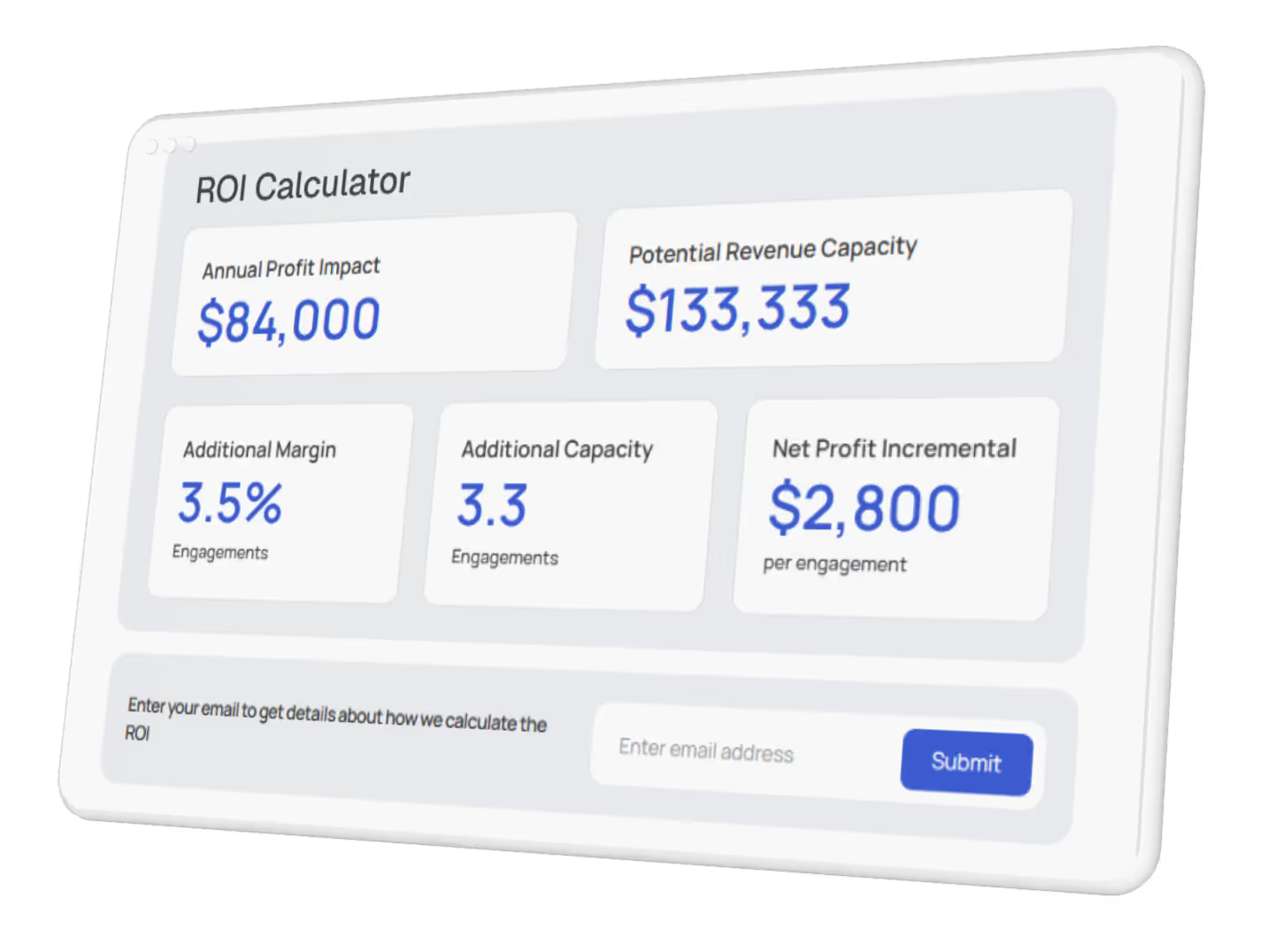
Reduction in Audit Cycle Time:For instance, a 40% reduction in audit cycles, as seen with KPMG's AI platform.
Improved Fraud Detection Rates:KPMG reported an improvement in fraud identification by up to 45%.
Decrease in Compliance Breaches:Baker Tilly achieved a 50% decrease.
Cost Savings:Expert King suggests achieving up to a 20% reduction in audit costs, as noted by The IIA.
Enhanced Audit Quality:Subjective but measurable through fewer restatements, stronger internal controls, and positive client feedback.
Communicating Value and Gaining Buy-in
Demonstrating ROI isn't just for internal reporting; it's crucial for stakeholder buy-in. When you can show that AI technology isn't just a shiny new toy but a strategic asset that delivers clear financial and operational benefits, you build momentum for further investment and adoption. This is where clear, data-driven communication becomes key.
Consider these points when communicating value:
- Quantify Benefits: Use specific percentages and dollar figures to illustrate improvements.
- Highlight Risk Mitigation: Emphasize how AI reduces exposure to fraud, errors, and compliance failures.
- Showcase Strategic Insights: Explain how AI-driven analysis provides deeper business understanding beyond traditional audit scope.
- Share Success Stories: Internally and externally, share examples of how AI has positively impacted audit outcomes.
Finspectors.ai specializes in automating the crucial initial steps of data fundamentals and reconciliation, which are often the most time-consuming and error-prone in traditional audits. By providing clean, validated data, it accelerates the transition to AI-augmented audits and enables continuous monitoring.
Absolutely! Small audit firms can effectively implement AI technology by starting with targeted solutions for specific pain points, leveraging cloud-based AI services, and partnering with experienced AI providers.RSM emphasizes that with the right partner, even leaner firms can achieve world-class outcomes.
Conclusion
The transition from traditional to AI-augmented audits is less about a technological leap and more about a strategic evolution. The most effective method isn't a single magic bullet but a thoughtful, phased approach that prioritizes human-AI collaboration, invests in continuous training, and leverages specialized AI technology solutions like Finspectors.ai for data fundamentals and reconciliation. By embracing AI, audit functions can move beyond their traditional role, becoming proactive, insightful, and indispensable strategic partners within their organizations. It’s an exciting time to be in audit, and the future is augmented!