



Foundations of Hybrid Audit Workflows
This integration is not merely about adopting new tools; it's about fundamentally rethinking audit methodologies. The goal is to empower auditors to focus on complex analyses and strategic decision-making, while machines handle the high-volume, repetitive tasks. Platforms like Finspectors exemplify this transformation.
Why Hybrid Audit Workflows are Essential
The necessity for hybrid audit workflows stems from several key factors, including the increasing volume and complexity of data, the need for continuous assurance, and the demand for greater audit efficiency and impact. Traditional audit methods struggle to keep pace with these challenges, making the integration of AI and human expertise indispensable.
- Data Overload: Organizations generate vast amounts of data daily. AI can process and analyze 100% of transactions, a task impossible for humans, ensuring no anomalies are missed.
- Continuous Monitoring: Regulatory requirements and business dynamics necessitate real-time insights. AI enables continuous monitoring, providing early-warning signals for potential issues.
- Efficiency and Cost Reduction: Automating routine tasks frees up auditors to focus on higher-value activities, leading to significant productivity gains and cost savings.
Key Components of an Integrated Audit Approach
A successful hybrid audit workflow relies on several interconnected components that facilitate seamless collaboration between AI and human auditors. These components work in concert to maximize the benefits of both machine insight and human judgment.
- AI-Driven Data Analytics: Utilizing algorithms to identify patterns, anomalies, and potential risks across large datasets.
- Machine Learning Models: Employing predictive and anomaly detection models to flag suspicious activities or control weaknesses.
- Automation Platforms: Tools that streamline repetitive tasks, such as data extraction, reconciliation, and report generation.
- Human-in-the-Loop Design: Ensuring that human auditors retain oversight, review AI outputs, and make final judgment calls.

AI-Driven Data Analysis and Anomaly Detection
At the heart of integrating machine insight into audit workflows lies the power of AI-driven data analysis and anomaly detection. This capability allows auditors to move beyond traditional sampling, analyzing 100% of transactions to uncover hidden risks and patterns that would otherwise go unnoticed. This comprehensive approach significantly enhances audit quality and risk coverage.
Machine learning algorithms are particularly adept at identifying deviations from expected behavior. For instance, they can detect unusual transaction volumes, abnormal payment patterns, or inconsistencies in financial records. These capabilities transform the audit process from a reactive, sample-based exercise into a proactive, full-scope analysis, providing a deeper understanding of an organization's financial health and control environment.
How AI Enhances Anomaly Detection and Risk Scoring
AI's ability to process and analyze vast datasets quickly and accurately makes it an invaluable tool for anomaly detection and risk scoring in audits. This leads to more targeted and effective audit procedures.
- Pattern Recognition: AI identifies subtle patterns in data that indicate potential fraud or errors, such as unusual vendor payments or duplicate invoices.
- Predictive Analytics: ML models can predict future risks based on historical data, allowing auditors to focus on areas with the highest potential for issues.
- Continuous Monitoring: AI systems can continuously scan transactions, providing real-time alerts for anomalies, which is crucial for early detection of control weaknesses.
For example,MindBridge AI platform analyzes 100% of financial transactions for anomalies and risks, delivering improved accuracy by eliminating manual sampling and enabling continuous monitoring for real-time compliance assurance.
Impact on Audit Efficiency and Accuracy
The integration of AI for data analysis has a profound impact on both the efficiency and accuracy of audit workflows. By automating the identification of anomalies, auditors can dedicate their time to investigating high-risk areas, leading to more impactful findings and recommendations.
These improvements are not theoretical; firms like KPMG with its Clara platform have boosted fraud identification rates, reducing fraudulent financial losses by up to 45%.
Automating Routine Audit Tasks
Workflow automation platforms, often powered by AI and ML, can handle a wide array of activities, from initial data ingestion and cleansing to generating preliminary reports and flagging discrepancies. This not only accelerates the audit process but also minimizes human error, leading to more accurate and reliable audit outcomes. The efficiency gains are substantial, with many organizations seeing significant productivity boosts.
Tasks Best Suited for Automation
Identifying which audit tasks are most amenable to automation is crucial for successful integration. These typically involve high-volume, rules-based, and repetitive activities.
- Data Extraction and Cleansing: Automatically pulling data from various systems and formats, then standardizing and cleaning it.
- Document Review: Using natural language processing (NLP) to analyze contracts, invoices, and other documents for specific clauses or anomalies. For instance,EY Helix has deployed automated document analysis and NLP that cut manual document review time by 50%.
- Reconciliation: Matching transactions across different ledgers and systems to identify discrepancies.
- Compliance Checks: Automatically verifying adherence to regulatory requirements and internal policies.
- Report Generation: Creating standardized audit reports and summaries based on analyzed data.
Benefits of Automating Audit Processes
The automation of routine audit tasks yields a multitude of benefits, impacting efficiency, accuracy, and the overall value proposition of the audit function.
- Increased Productivity: Automation can lead to a 25-30% productivity gain, allowing auditors to complete more work in less time.
- Reduced Errors: Machines are less prone to human error, leading to a 40-75% reduction in errors in data capture and processing.
- Faster Cycle Times: Audit cycle times can be reduced by up to 62%, enabling more timely insights and decision-making.
- Enhanced Focus: Auditors can redirect their expertise to complex problem-solving, strategic analysis, and client advisory, rather than manual checks.
- Cost Savings: Around 60% of organizations recover automation investment within 12 months, demonstrating a strong ROI.
A notable example is Johnson Lambert CPA firm, which used generative AI to process report tables, cutting manual audit report processing time by 50% and increasing audit efficiency by 20% in insurance audits.
Human-in-the-Loop Design and Explainable AI
Explainable AI (XAI) plays a vital role in this integration. Without explainability, AI outputs can be perceived as black boxes, hindering trust and adoption.
Principles of Human-in-the-Loop Audit
Human-in-the-loop (HITL) design ensures that human auditors are actively involved in the AI-driven audit process, leveraging their unique skills where machines fall short.
- Validation of AI Findings: Auditors review and confirm anomalies flagged by AI, applying their contextual knowledge and professional skepticism.
- Complex Judgment Calls: AI can identify potential issues, but human auditors make the final judgment on materiality, risk assessment, and the implications of findings.
- Ethical Oversight: Humans are essential for addressing ethical dilemmas, bias in data, and ensuring fairness in AI-driven decisions.
- Client Communication: Auditors use AI insights to inform discussions with clients, providing value-added advisory services based on comprehensive data analysis.
This approach empowers auditors to use AI insights as decision support rather than a replacement, focusing human expertise on complex judgment, interpretation, and client advisory, as highlighted by experts.
The Importance of Explainable AI (XAI)
XAI is not just a technical feature; it's a foundational requirement for building trust and ensuring the responsible use of AI in auditing. Transparency is a significant concern, with 44% of organizations citing it as an adoption barrier.
- Trust and Confidence: Auditors need to understand how AI reached a conclusion to trust its output and present it confidently to stakeholders.
- Regulatory Compliance: Many regulations require transparency and auditability of automated decision-making processes.
- Bias Detection: XAI helps identify and mitigate potential biases in AI models, ensuring fair and unbiased audit outcomes.
- Continuous Improvement: Understanding AI's reasoning allows auditors to provide targeted feedback, leading to better model performance over time.
- Training and Adoption: Explainable models are easier for auditors to learn from and integrate into their existing workflows, fostering greater adoption.
For instance, reinforcement learning mechanisms can enhance audit plan precision by 4.2% per cycle in early implementations, demonstrating the value of iterative feedback loops facilitated by explainable systems.

Integration Challenges and Solutions
While the benefits of integrating machine insight with human expertise in audit workflows are clear, organizations face several challenges during implementation. These can range from technical hurdles to cultural resistance and data governance issues. Addressing these challenges proactively is crucial for successful adoption and realizing the full potential of hybrid audit models.
A common pitfall is poor integration and governance, leading to 42% of companies abandoning AI projects in 2024. Therefore, strategic planning, robust infrastructure, and a focus on change management are essential to overcome these obstacles and ensure a smooth transition to AI-augmented auditing.
Common Challenges in AI Integration
Organizations often encounter specific difficulties when attempting to integrate AI into their audit processes. Understanding these challenges is the first step toward developing effective solutions.
- Data Quality and Accessibility: AI models require high-quality, structured data. Inconsistent data formats, silos, and poor data governance can hinder effective analysis.
- Talent Gap: A shortage of auditors with AI literacy and data science skills can impede implementation and effective utilization of new tools.
- Cost of Implementation: Initial investment in AI software, infrastructure, and training can be substantial, requiring a clear ROI justification.
- Resistance to Change: Auditors accustomed to traditional methods may resist adopting new technologies, fearing job displacement or increased complexity.
- Security and Privacy Concerns: Handling sensitive client data with AI raises significant security and privacy issues that must be meticulously addressed.
Strategies for Overcoming Integration Hurdles
Effective strategies are needed to navigate the complexities of AI integration and ensure a successful transition to a hybrid audit environment.
- Invest in Data Governance: Establish clear policies and procedures for data collection, storage, and quality to ensure AI models have reliable inputs. Implement strong data integrity mechanisms, such as blockchain-based audit trails, to reduce inconsistencies by over 90%.
- Upskill and Reskill Workforce: Provide comprehensive training programs for auditors in data analytics, AI concepts, and the use of new tools.
- Phased Implementation: Start with pilot projects on specific audit areas to demonstrate value and build confidence before scaling up.
- Foster a Culture of Innovation: Encourage experimentation and open communication about the benefits of AI, addressing concerns transparently.
- Prioritize Explainable AI: Choose AI solutions that offer transparency and explainability to build trust and facilitate auditor understanding.
The global machine learning market is projected to grow from about$113 billion in 2025 to $503 billion by 2030, reflecting rapid adoption rates and technological advances that facilitate audit automation integration, making these solutions more accessible.
Best Practices for Hybrid Audit Implementation
From selecting the right tools to fostering a collaborative environment, each step in the implementation process contributes to the overall success of the hybrid model. Focusing on these best practices helps organizations maximize their return on investment in AI technologies and elevate the quality of their audit function.
Strategic Considerations for Tool Selection
Choosing the appropriate AI and automation tools is a critical first step. The selection should align with the organization's specific audit needs, data infrastructure, and strategic objectives.
- Scalability: Select platforms that can grow with your organization's needs and handle increasing data volumes.
- Integration Capabilities: Ensure tools can seamlessly integrate with existing IT infrastructure and accounting systems, as discussed in research on integrating machine learning in cloud-based accounting systems.
- Explainability: Prioritize solutions that offer clear explanations for their outputs, supporting human understanding and trust.
- Security Features: Verify robust data security and privacy controls, especially when dealing with sensitive financial information.
- Vendor Support and Training: Assess the level of support, training, and ongoing development provided by the vendor.
Cultivating a Collaborative Audit Environment
The success of a hybrid audit model hinges on effective collaboration between human auditors and AI systems. This requires a cultural shift and specific practices to foster synergy.
- Define Roles Clearly: Establish clear responsibilities for both AI and human auditors, emphasizing that AI is a tool to augment, not replace, human judgment.
- Continuous Learning: Encourage auditors to continuously learn about AI capabilities and limitations, and provide feedback to improve AI models.
- Cross-Functional Teams: Form teams comprising auditors, data scientists, and IT professionals to facilitate knowledge sharing and problem-solving.
- Pilot Programs: Implement small-scale pilot programs to test new tools and workflows, gather feedback, and refine processes before broader rollout.
- Performance Metrics: Develop metrics that measure the combined performance of human and AI elements, focusing on improved efficiency, accuracy, and insight generation.
For example,Inflo AI platform enhanced CA firm workflows by automating client communication and risk assessments, resulting in a 35% improvement in audit efficiency and a 70% reduction in manual data entry time.

Conclusion
The best way to integrate machine insight with human expertise in audit workflows is through a carefully orchestrated hybrid model that leverages AI for data-intensive tasks and empowers human auditors for judgment-driven decision-making. This approach not only enhances efficiency and accuracy but also transforms the audit function into a more strategic and value-adding component of an organization. By embracing AI-driven analytics, automation, and human-in-the-loop design, audit teams can achieve unparalleled insights, mitigate risks more effectively, and maintain the highest standards of professional skepticism and ethical oversight.
The journey towards a fully integrated hybrid audit workflow involves addressing challenges related to data quality, talent development, and cultural change. However, with strategic planning, investment in explainable AI, and a commitment to continuous improvement, organizations can unlock the full potential of this powerful synergy. This collaborative future ensures that audits are not just compliant, but truly insightful, proactive, and resilient in an increasingly complex business environment. Explore how Finspectors’ hybrid AI-plus-human workflow can help your audit teams automate routine checks, maintain explainability, and strengthen judgment-driven decision-making across every engagement.
TL;DR
The best way to integrate machine insight with human expertise in audit workflows is through a hybrid model leveraging AI-driven analytics, automation, and a human-in-the-loop design. Explainable AI (XAI) is crucial for building trust and ensuring auditors understand AI outputs. Platforms such as Finspectors demonstrate this evolution.
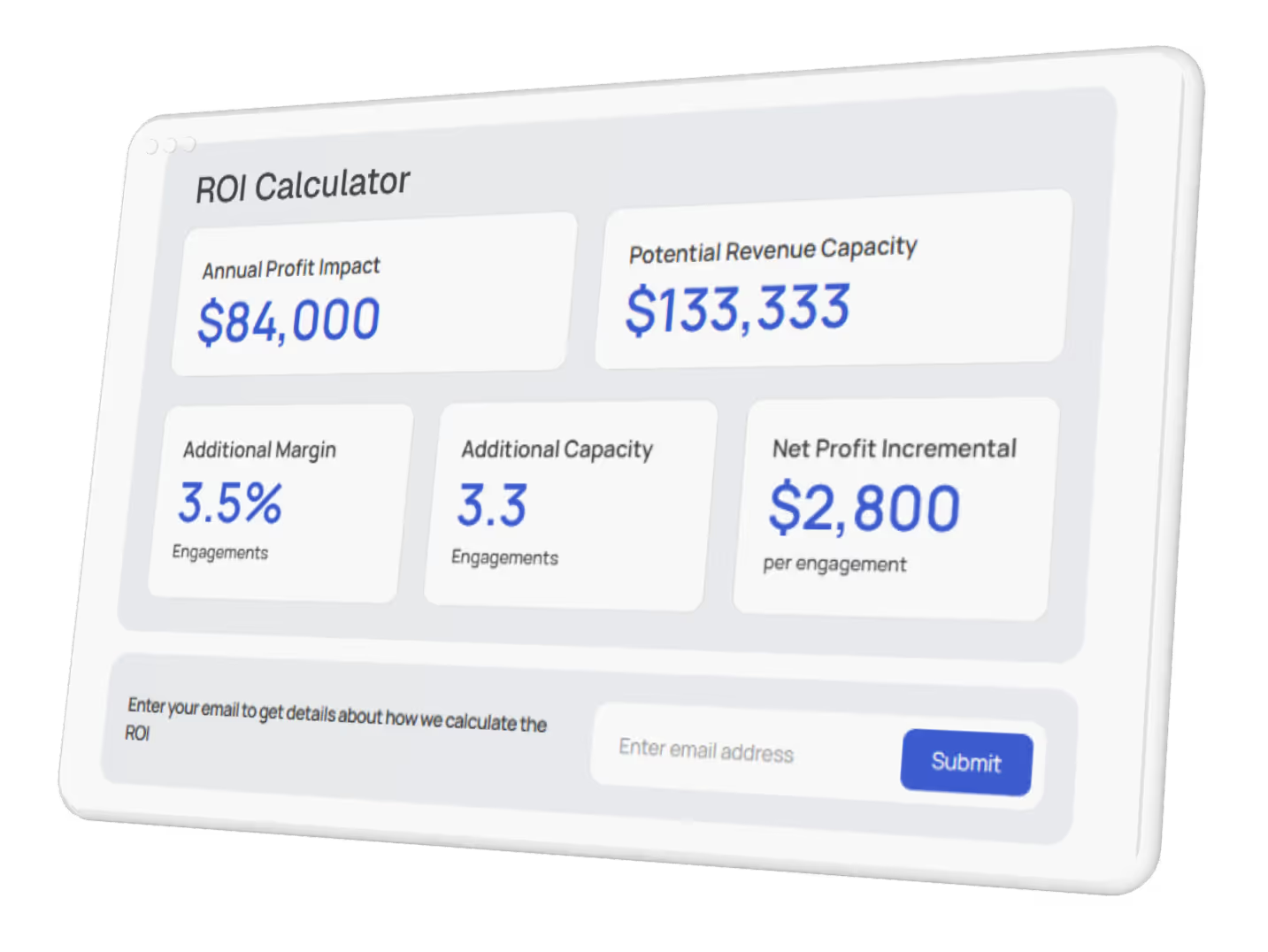
Many organizations see a rapid return on investment. Around 60% recover automation investment within 12 months due to significant productivity gains (25-30%), error reductions (40-75%), and improved fraud detection, leading to substantial cost savings and enhanced audit quality.