



1. Finspectors.ai
Finspectors.ai is a specialized solution for document identification and collection through Intelligent Narration and AI. Unlike generic project management tools, Finspectors focuses on audit workflows, automating evidence retrieval and validation directly from source systems. The platform combines automated evidence collection with intelligent risk assessment to streamline the entire audit process.
2. Unprecedented Efficiency and Productivity Gains
For small and medium-sized practices (SMPs), the most immediate impact of adopting AI technology is a dramatic increase in operational efficiency. Historically, auditors at smaller firms have been burdened with manual data entry, sampling, and reconciliation tasks that consume valuable billable hours. By integrating platforms like Finspectors, firms can automate these repetitive processes, allowing professionals to focus on high-value judgment and analysis.
Recent industry data supports this shift toward automation. According to a report by KPMG US, 62% of AI leaders in audit firms report increased employee efficiency and productivity as a primary outcome of AI adoption. Furthermore, real-world applications show significant time savings. For instance, firms using advanced tools have reported substantial reductions in workflow time, with some projecting up to 90% time savings on specific tasks as noted in case studies by Trullion.
Automating Routine Audit Workflows
The efficiency gains are not abstract; they stem from the specific automation of labor-intensive tasks. When an audit firm implements a transition roadmap to becoming an AI-augmented audit firm, they typically see immediate relief in the following areas:
- Data Extraction and Entry: AI tools automatically extract data from invoices, bank statements, and contracts, eliminating manual keying errors.
- Reconciliation Processes: Algorithms match transactions across different ledgers instantly, flagging only the discrepancies for human review.
- Document Review: Natural Language Processing (NLP) can scan thousands of pages of contracts to identify specific clauses or non-standard terms in minutes.
- Report Generation: Automated drafting of preliminary audit reports based on findings reduces the administrative burden at the end of the engagement.
- Client Communication: Automated request lists and follow-ups ensure that client data is collected without constant manual intervention.
Real-World Impact on Billable Hours
The reduction in manual hours allows firms to reallocate resources. Instead of spending 40 hours on data verification, an auditor might spend 4 hours reviewing AI-generated findings and 36 hours on client advisory services. This shift is critical for firms facing talent shortages, as it reduces burnout associated with mundane tasks.
3. Cost Reduction and Positive ROI
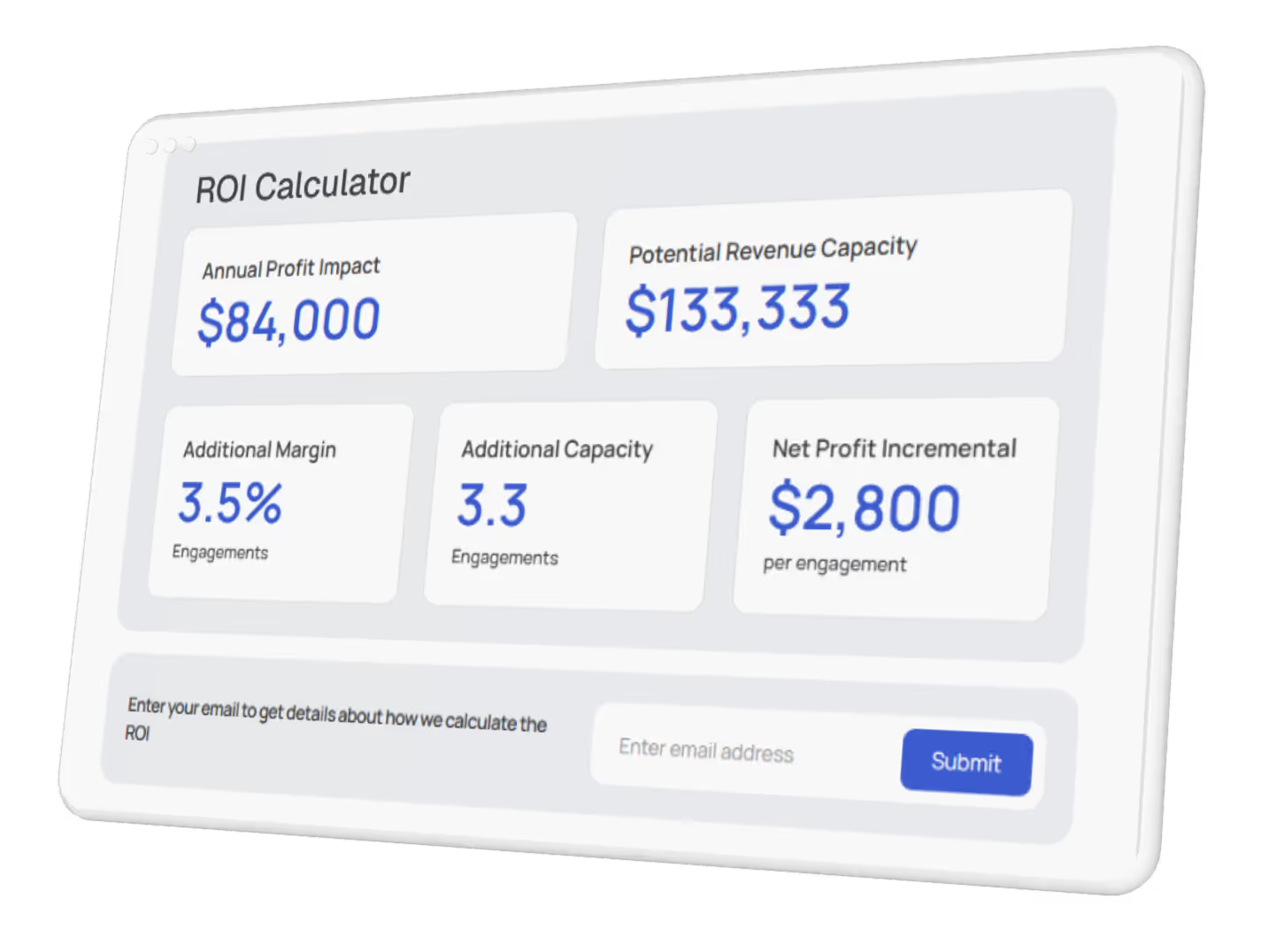
For small and medium-sized firms, the cost of technology is often a barrier to entry. However, the return on investment (ROI) for modern AI technology in auditing is realized quickly through labor savings and capacity expansion. By automating time-consuming tasks, firms can handle more clients without increasing headcount, directly impacting the bottom line.
The financial argument for adoption is strong. According to Vention Teams, 83% of organizations implementing AI platforms saw a positive ROI within just three months. Furthermore, 46% of finance leaders believe audit technology delivers necessary cost reductions, as reported by BDO.
How AI Drives Down Costs
The cost reductions are multifaceted, affecting both direct labor and overhead. Here is how the savings materialize:
- Reduced Overtime: During busy seasons, AI handles the data crunching, significantly reducing the need for expensive overtime pay for staff.
- Lower Error Correction Costs: By catching errors early in the process, firms avoid the costly rework associated with late-stage discovery of material misstatements.
- Scalability Without Hiring: Firms can take on larger clients or more engagements using their existing team, avoiding recruitment and training costs.
- Software Consolidation: Comprehensive AI platforms often replace multiple disjointed tools (OCR, analytics, workflow), reducing total software subscription costs.
- Travel Reduction: With cloud-based AI auditing, much of the fieldwork can be performed remotely, cutting travel and accommodation expenses.
Measuring the ROI
To understand the financial impact, firms should track specific metrics post-implementation. Key performance indicators include the average cost per audit engagement, the realization rate per partner, and the percentage of non-billable administrative time. As firms move toward the vision of Audit 2.0 and AI-native firms, these metrics typically show a positive trend, justifying the initial technology investment.
4. Improved Data Management and Analysis
Data is the lifeblood of the audit process, but managing disparate data sources from various clients is a major challenge for SMPs. AI platforms excel at ingesting, standardizing, and analyzing unstructured data. This capability transforms raw data into actionable insights, allowing auditors to provide strategic value beyond simple compliance.
Statistics show that 61% of finance leaders use AI for data management and transformation, according to BDO. Additionally, 50% of auditors report increased visibility into end-to-end processes and controls when using AI tools, as noted in the KPMG AI in Audit Survey.
From Compliance to Advisory
With improved data analysis, the auditor's role evolves. Instead of just verifying the past, they can help predict the future. AI tools facilitate this by:
- Predictive Analytics: Using historical data to forecast cash flow trends and potential liquidity issues.
- Industry Benchmarking: Comparing a client's financial ratios against aggregated industry data to identify performance gaps.
- Control Testing: Continuously monitoring internal controls to identify weaknesses before they result in financial loss.
- Unstructured Data Analysis: Analyzing emails, board minutes, and social media sentiment to assess qualitative risks.
Strategic Client Value
Clients are increasingly willing to pay for these insights.BDO reports that 97% of finance leaders are willing to pay a premium for audits underpinned by advanced technologies. This presents a revenue opportunity for small firms to upsell advisory services based on the rich data analysis provided by their AI platforms.
5. Competitive Parity with Big 4 Firms
Historically, the "Big 4" accounting firms held a distinct advantage due to their massive investments in proprietary technology. However, the democratization of AI technology through platforms like Finspectors is leveling the playing field. Small and medium-sized firms can now access enterprise-grade audit tools that were previously out of reach.
This technological parity is essential for survival and growth.Stanford HAI reports that 78% of companies globally are now using AI, up from 55% in 2023. Clients expect their auditors to be as technologically advanced as they are. By adopting these tools, SMPs can demonstrate how small and medium-sized audit firms can compete with the Big 4 effectively.
Building Client Trust
Trust is the currency of the audit profession. Using advanced AI tools signals to clients that the firm is modern, efficient, and thorough. According to BDO, 81% of finance leaders report greater trust in audit firms that use advanced technologies.
Winning Larger Clients
With AI, the constraint of "manpower" is reduced. A smaller team can handle complex audits that involve massive datasets, allowing SMPs to bid for and win larger clients that were previously the exclusive domain of larger firms. This capability is a key driver in the growth strategies of modern audit practices.
Conclusion
The integration of AI technology into the audit process is no longer a futuristic concept but a present-day necessity for small and medium-sized firms. The benefits-ranging from operational efficiency and cost reduction to enhanced risk detection and competitive parity-are transformative. By adopting platforms like Finspectors, SMPs can not only survive in a technology-driven market but thrive by offering superior value and insights to their clients. The shift toward AI-augmented auditing represents a strategic opportunity to modernize operations, empower staff, and secure a sustainable future for the firm.
TL;DR
AI audit platforms offer small and medium-sized firms five key benefits: unprecedented efficiency gains by automating tasks (e.g., data extraction, reconciliation), enhanced risk assessment through 100% transaction analysis and anomaly detection (e.g., Benford's Law), significant cost reduction and positive ROI within three months, improved data management for strategic advisory and competitive parity with Big 4 firms by providing access to enterprise-grade tools.