



TL;DR
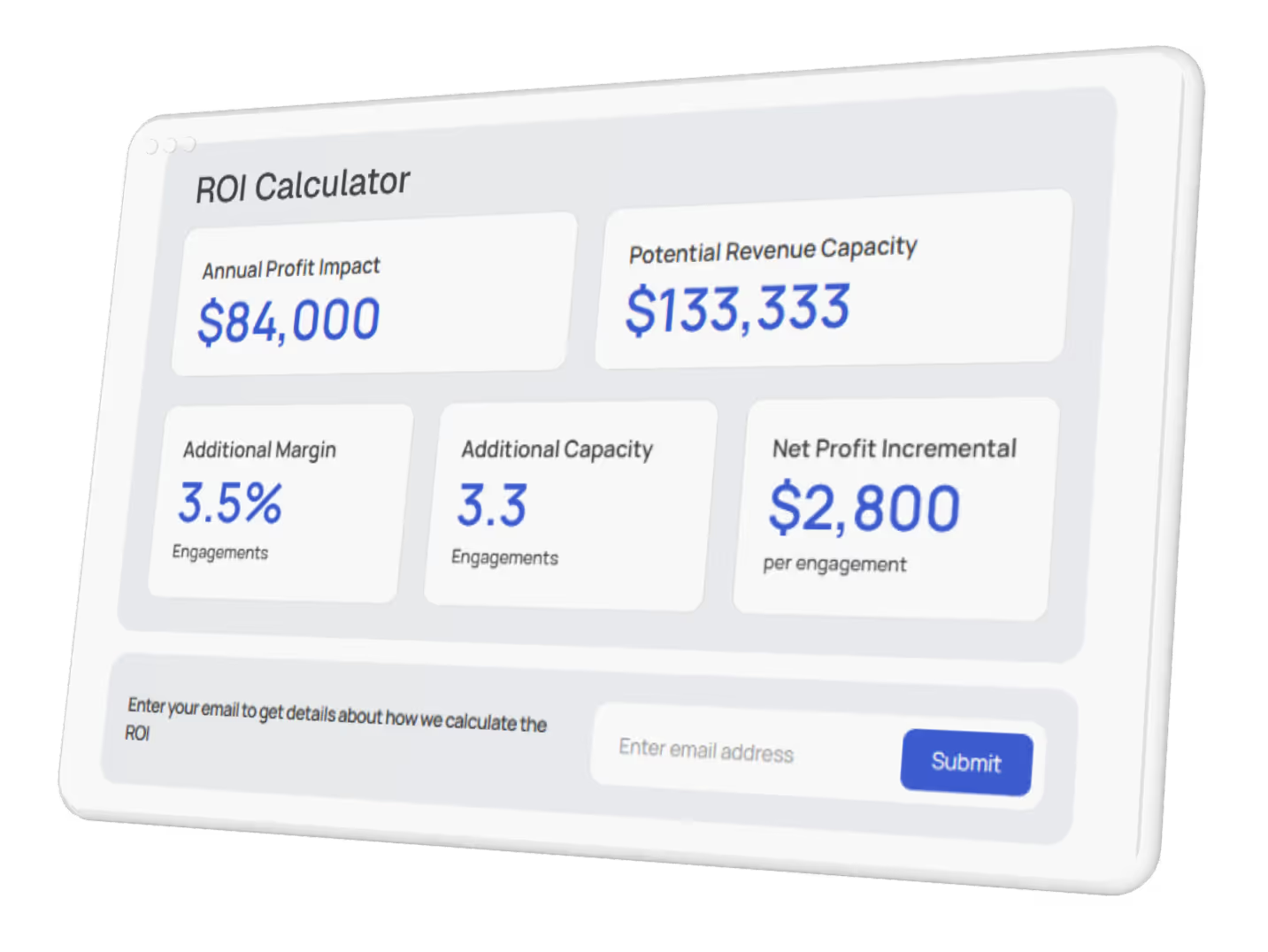
In 2025, leading AI platforms like Finspectors, KPMG Clara, and AuditBoard are revolutionizing audit narratives through specialized auto-drafting capabilities that optimize workflows, improve risk detection, and ensure legal compliance. The AI-powered data analysis in audits market is projected to reach USD 45.7 billion by 2034 (18.4% CAGR), and audit firms investing in AI can achieve substantial annual savings and increased productivity while remaining competitive.
Understanding AI in Audit Narratives
The landscape of auditing is rapidly changing, driven by the integration of advanced AI technology. These tools are not just about automating tasks; they are about enhancing the quality, consistency, and efficiency of audit documentation across various workflows.
AI technology in auditing extends beyond simple automation. This capability is particularly valuable in creating audit workpapers, risk assessments, and compliance reports, where precision and clarity are paramount.
What is AI Auto-Drafting in Audit?
AI auto-drafting in audit refers to the use of artificial intelligence to automatically generate written audit narratives, summaries, and reports based on structured and unstructured audit data. This process leverages natural language generation (NLG) and machine learning to transform raw findings into clear, concise, and compliant documentation.
- Data Synthesis: AI platforms can ingest data from various sources, including financial statements, transaction logs, interview notes, and prior audit reports, to form a comprehensive understanding of the audit scope.
- Narrative Generation: Based on the synthesized data, the AI constructs coherent narratives that explain audit findings, control effectiveness, and risk assessments.
- Consistency & Compliance: These tools ensure that narratives adhere to predefined templates, regulatory standards, and internal guidelines, reducing human error and ensuring uniformity.
The Expanding Market for AI Audit Solutions
The market for AI-powered audit solutions is experiencing significant growth, reflecting a widespread recognition of the benefits that AI technology brings to the auditing profession. This expansion is driven by the need for greater efficiency, improved risk detection, and enhanced compliance in an increasingly complex regulatory environment. The adoption of AI is no longer a niche trend but a strategic imperative for many organizations.
Market data from 2024 and projections for 2025 highlight this rapid growth. The AI-powered data analysis in audits market is projected to grow at a Compound Annual Growth Rate (CAGR) of 18.4% from 2025 to 2034, reaching a valuation of USD 45.7 billion by 2034. Solutions (platforms) accounted for 71.4% of this market in 2024, underscoring the demand for integrated AI platforms that automate complex audit tasks like narrative auto-drafting, risk scoring, and anomaly detection.
Key Market Growth Drivers
Several factors contribute to the explosive growth of AI in auditing. These drivers include the increasing volume of data, the complexity of regulatory requirements, and the desire for more efficient and accurate audit processes.
- Efficiency Gains: AI tools can save significant audit hours. According to AuditBoard’s 2025 Risk Intelligence Report, AI adoption in audit functions has risen from 8% to 21% in one year, with 53% of enterprises implementing AI tools. These platforms help save up to 8,000 audit hours annually, increase productivity by 20-40%, and bring annual savings of approximately $3.7 million for large enterprises.
- Enhanced Risk Detection: AI's ability to analyze vast datasets quickly allows for more thorough risk assessments and anomaly detection, leading to more robust audits.
- Regulatory Compliance: AI assists in ensuring that audit narratives and reports meet stringent regulatory standards, reducing the risk of non-compliance.
2024 Valuation (USD)
Projected 2033 Valuation (USD)
CAGR (2024-2033)
AI-Powered Data Analysis in Audits
~10.5 Billion
45.7 Billion (by 2034)
Generative AI in Audit
111.7 Million
2.7 Billion
AI in Accounting Market
4.87 Billion
~6.7 Billion (by 2025)
39.6% (till 2033)
Specialized AI Auto-Drafting Capabilities
The core of modern AI audit platforms lies in their specialized auto-drafting capabilities. These are not generic text generators but intelligent systems trained on vast amounts of audit-specific data, enabling them to produce narratives that are accurate, relevant, and compliant. The sophistication of these tools allows for tailoring to specific audit needs, from financial audits to compliance reviews.
Finspectors, for example, offers AI-powered narrative drafting that directly addresses the challenge of transforming structured audit testing data into clear, review-ready workpapers. Their approach significantly reduces manual effort and improves the consistency of audit documentation, as detailed in their blog on Intelligent Narrative Auto-Drafting. This capability is crucial for audit teams facing tight deadlines and increasing data volumes.
How AI Auto-Drafting Works
AI auto-drafting leverages advanced natural language processing (NLP) and machine learning models to understand, interpret, and generate human-like text. For audit narratives, this involves several key steps:
- Data Ingestion: The AI system collects and processes various forms of audit data, including numerical data, text documents, emails, and interview transcripts.
- Contextual Analysis: It then analyzes this data to understand the context, identify key findings, and detect potential risks or anomalies. This is where the "intelligence" comes in, as the AI learns from past audit reports and best practices.
- Narrative Construction: Using natural language generation (NLG) techniques, the AI constructs narratives that explain the audit process, findings, conclusions, and recommendations. These narratives are often presented as first drafts, ready for auditor review and refinement.
Examples of Auto-Drafting in Practice
The practical applications of AI auto-drafting are diverse and impactful, streamlining various aspects of the audit process.
- Workpaper Generation: AI can draft detailed workpaper sections based on testing results, outlining the scope, methodology, findings, and conclusions for specific audit areas.
- Risk Assessment Summaries: Platforms can generate summaries of identified risks, their potential impact, and the effectiveness of existing controls, drawing directly from risk matrices and control testing data.
- Compliance Report Sections: For regulatory compliance audits, AI can auto-draft sections of reports that detail adherence to specific regulations, citing relevant evidence and identifying areas of non-compliance.
Optimizing Audit Workflows with AI
AI platforms are not just about generating text; they are fundamentally reshaping audit workflows. By integrating intelligent auto-drafting with other AI technology features, these platforms create a more streamlined, collaborative, and efficient audit process. This optimization touches every stage of the audit, from planning and execution to reporting and follow-up.
The focus on workflow optimization is evident in how leading platforms tailor their offerings. Whether it's enhancing collaboration among audit teams, improving the accuracy of risk detection, seamlessly integrating with tools like Excel, or ensuring robust legal compliance, AI is providing targeted solutions. This holistic approach ensures that AI augments, rather than complicates, the auditor's work.
Key Workflow Optimizations
AI technology solutions are designed to address specific pain points in traditional audit workflows, leading to tangible improvements.
- Collaboration: AI platforms facilitate better teamwork by providing a centralized environment for document sharing, real-time feedback on auto-drafted narratives, and version control. This reduces communication overhead and ensures all team members are working with the most current information.
- Risk Detection: Advanced AI algorithms can continuously monitor data for anomalies and patterns indicative of fraud or control weaknesses, providing early warnings that human auditors might miss. This proactive approach to risk detection is a significant advantage.
- Excel Integration: Many audit processes heavily rely on Excel. Platforms like DataSnipper offer robust integration, allowing auditors to leverage AI for data extraction, reconciliation, and narrative generation directly from their spreadsheets, minimizing manual data transfer errors.
- Legal Compliance: AI tools are trained on regulatory frameworks and can automatically flag potential compliance issues in narratives, ensuring that all reports meet legal and industry standards before submission.
Impact on Audit Efficiency and Quality
The strategic application of AI in audit workflows leads to significant improvements in both efficiency and the overall quality of audit outcomes.
- Reduced Cycle Times: By automating narrative drafting and data analysis, AI can reduce audit cycle times from weeks to days, allowing for more frequent and timely audits.
- Improved Accuracy: AI's ability to process large volumes of data without fatigue reduces the likelihood of human error in data analysis and narrative generation.
- Enhanced Auditor Focus: With AI handling routine tasks, auditors can dedicate more time to complex problem-solving, critical thinking, and client advisory, increasing their value proposition.
Leading AI Platforms in 2025
The market for AI audit platforms is vibrant, with several key players offering innovative solutions tailored to various audit needs. These platforms leverage cutting-edge AI technology to provide specialized auto-drafting capabilities, alongside features for collaboration, risk detection, Excel integration, and legal compliance. Understanding the strengths of each platform can help organizations choose the best fit for their specific requirements.
Companies like Finspectors, KPMG Clara, AuditBoard, and DataSnipper are at the forefront of this evolution. Each platform brings a unique set of features and a distinct approach to integrating AI into the audit process, demonstrating the diverse applications of AI technology in the field.
Spotlight on Key Platforms
Here's a closer look at some of the leading AI platforms making significant strides in audit narrative auto-drafting and workflow optimization:
- Finspectors: As highlighted earlier,Finspectors excels in transforming structured audit testing data into clear, review-ready workpapers. Their AI-powered narrative drafting significantly reduces manual effort and enhances documentation consistency, making them a strong contender for firms prioritizing efficient workpaper generation.
- KPMG Clara: Built on Microsoft Azure,KPMG Clara integrates agentic AI to provide real-time insights. It automates the generation of process narratives and risk-associated documentation, synthesizing multiple inputs into first-draft narratives for auditors to refine. This platform is particularly strong for large enterprises seeking comprehensive AI integration across their audit functions, as noted by Microsoft's customer story.
- AuditBoard: AuditBoard incorporates generative AI and intelligent recommendations to streamline internal audits. It links risks, controls, and testing documentation, enhancing efficiency and accuracy. Its AI tools can draft emails for evidence requests and improve compliance documentation quality, offering significant time savings in audit lifecycle management.
- DataSnipper: Recognized for its impact on simplifying audit processes,DataSnipper automates auditing tasks including auto-drafting, Excel integration, and compliance-focused workflows. It supports accountants with improved documentation generation and error detection, making it a favorite for its robust integration capabilities.
- ReelMind: ReelMind offers an AI audit advisory ecosystem with advanced narrative structure guidance. Its AI assistant, Nolan, provides intelligent suggestions on narrative flow, pacing, and content adjustments, improving user engagement and audit reporting quality.
Comparison of Leading AI Audit Platforms (Illustrative)
Primary Strength
Auto-Drafting Focus
Key Workflow Optimization
Integration Highlights
Finspectors
Workpaper Efficiency
Structured data to narratives
Documentation consistency
Audit testing platforms
Real-time Insights
Process narratives, risk docs
Agentic AI, multi-input synthesis
Microsoft Azure
Internal Audit Streamlining
Compliance documentation, evidence requests
Risk-control linking, intelligent recommendations
Internal audit systems
DataSnipper
Excel Integration
Documentation generation, error detection
Data extraction, reconciliation
Microsoft Excel
Narrative Advisory
Structure guidance, content adjustments
Workflow integration, user engagement
AI advisory ecosystem
Strategies for AI Adoption in Auditing
Successfully integrating AI technology into audit practices requires a strategic approach. It's not enough to simply acquire an AI platform; organizations must also develop clear implementation strategies that address data integration, workflow changes, and human-AI collaboration. These strategies are crucial for maximizing the benefits of AI auto-drafting and ensuring a smooth transition.
Drawing from the experiences of leading firms and platforms, several best practices have emerged for effective AI adoption. These practices emphasize a phased approach, continuous learning, and a focus on augmenting human capabilities rather than replacing them entirely.
Actionable Advice for AI Integration
Organizations looking to implement AI auto-drafting should consider the following strategies:
- Start with a Pilot Project: Begin with a smaller, well-defined audit area to test the AI platform and gather feedback. This allows for adjustments and refinement before a broader rollout. For instance, using AI to draft narratives for a specific low-risk control area can provide valuable insights without disrupting critical operations.
- Leverage AI for Data Synthesis: Use AI to synthesize multiple data sources, such as prior narratives, interview transcripts, and system documents, into cohesive first-draft narratives. Human auditors can then refine these drafts for accuracy and contextual relevance, as practiced by KPMG.
- Adopt Linear Walkthrough Interview Techniques: To improve AI narrative cohesiveness, separate main process flows from edge cases during interviews. This helps the AI better understand and document standard audit paths, leading to more accurate auto-drafted narratives.
- Utilize Specialized Workflow Optimization Features: Choose platforms with features like robust Excel integration (e.g.,DataSnipper), collaboration tools, or risk detection models customized to audit needs. This ensures AI augments rather than complicates auditor work.
- Invest in Training and Skill Development: Ensure audit teams are trained not only on how to use the AI tools but also on how to effectively review, refine, and interpret AI-generated content. This includes understanding the AI's limitations and biases.
Overcoming Implementation Challenges
While the benefits are clear, adopting AI also presents challenges that need to be addressed proactively.
- Data Quality: AI models are only as good as the data they are trained on. Ensuring clean, accurate, and comprehensive data is paramount for effective auto-drafting.
- Change Management: Auditors may be resistant to new technologies. Effective change management strategies, including clear communication and demonstrating tangible benefits, are essential.
- Ethical Considerations: Addressing concerns around AI bias, data privacy, and the ethical use of AI in decision-making is critical for building trust and ensuring responsible AI deployment.
The Future of AI in Audit and Compliance
The trajectory of AI technology in auditing points towards an even more integrated and sophisticated future. As AI models become more advanced, their capabilities will expand beyond auto-drafting to encompass more complex analytical tasks, predictive insights, and autonomous audit functions. This evolution will further redefine the role of the auditor, shifting it towards strategic oversight and expert judgment.
The continuous growth of the AI auditing market, with segments like generative AI in audit expected to expand at a CAGR of 42.5%, reaching nearly USD 2.7 billion by 2033, signifies the immense potential and ongoing investment in this area. Future AI technology solutions will likely focus on even greater automation and intelligence.
Emerging Trends and Innovations
Several key trends are shaping the future of AI in audit and compliance:
- Agentic AI: The rise of agentic AI, which can handle multi-step audit tasks autonomously (e.g., triggering evidence requests, verifying document quality), will further decrease manual intervention and accelerate audit cycles, as explored in AI in Internal Compliance Audits.
- Predictive Auditing: AI will increasingly move from reactive analysis to predictive insights, identifying potential risks and compliance issues before they materialize. This will enable auditors to take a more proactive stance.
- Explainable AI (XAI): As AI systems become more complex, the demand for explainable AI will grow. XAI will ensure that auditors can understand the reasoning behind AI-generated narratives and recommendations, fostering trust and accountability.
- Real-time Monitoring: AI-powered platforms will offer continuous, real-time monitoring of financial data and internal controls, providing immediate alerts for anomalies and ensuring ongoing compliance.
The Evolving Role of the Auditor
The integration of advanced AI technology will transform the auditor's role, requiring a new set of skills and a shift in focus.
- Strategic Advisor: Auditors will transition from data gatherers and document drafters to strategic advisors, leveraging AI-generated insights to provide higher-value recommendations to clients and management.
- AI Oversight and Governance: A critical new role will be overseeing AI systems, ensuring their accuracy, fairness, and compliance with ethical guidelines. This includes validating AI-generated narratives and challenging AI conclusions when necessary.
- Data Scientist/Analyst: Auditors will need stronger data analytics skills to interpret AI outputs, understand complex data patterns, and work effectively with AI-driven tools.
Conclusion
The integration of AI technology, particularly specialized auto-drafting capabilities, is fundamentally transforming the audit profession. Leading platforms in 2025, including Finspectors, KPMG Clara, and AuditBoard, are providing intelligent solutions that optimize workflows for collaboration, risk detection, Excel integration, and legal compliance. These AI technology solutions are not merely tools for automation but strategic assets that enhance efficiency, improve accuracy, and elevate the quality of audit narratives. As the market continues its rapid growth, embracing these AI innovations will be crucial for audit firms and internal audit departments seeking to navigate the complexities of modern auditing and deliver superior value.